
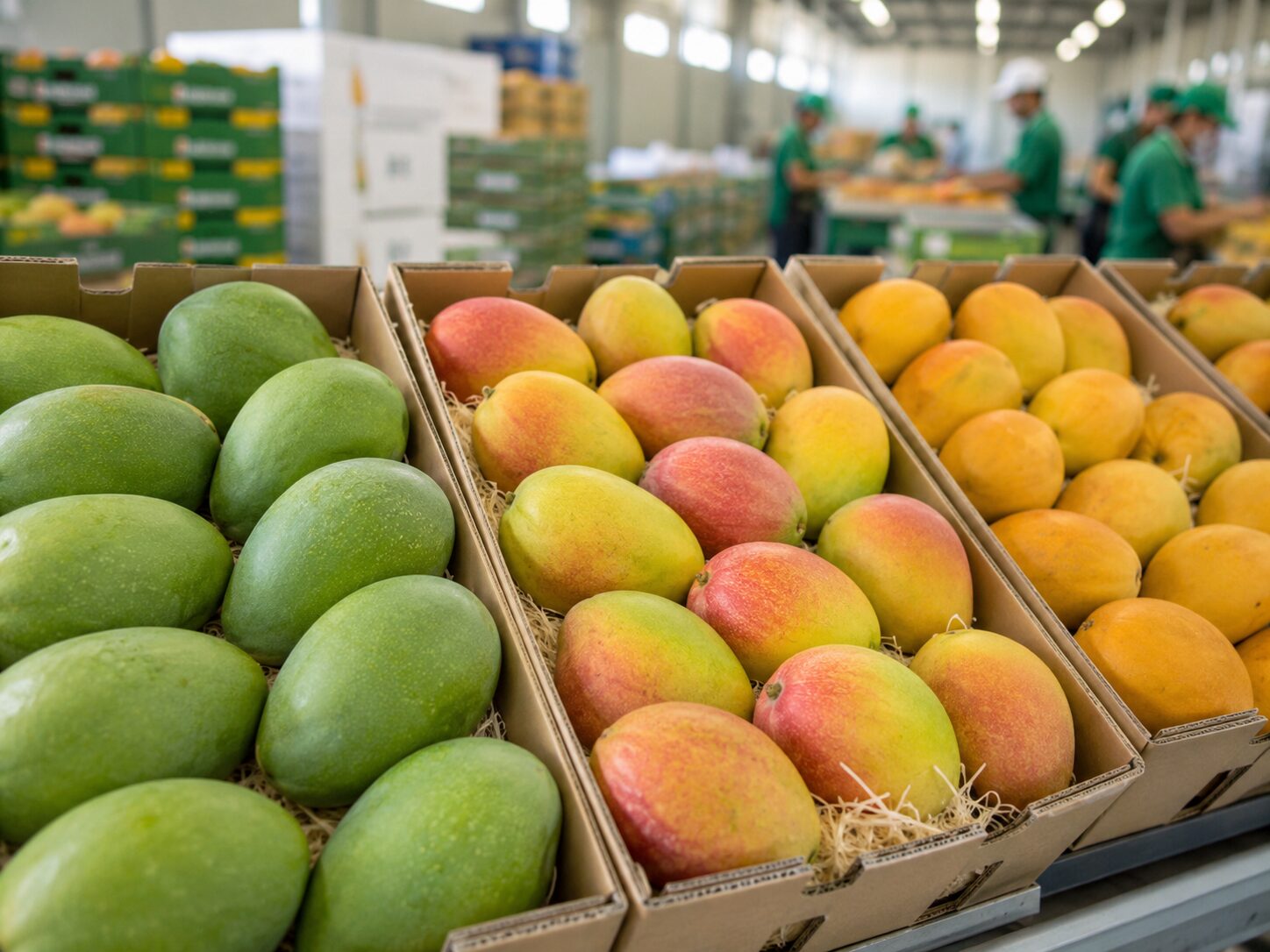
Grade is the word that causes the most arrival disputes on mango, because buyers and sellers often use it loosely. A quotation that says premium quality means nothing on a survey report. A quotation that says Class I under UNECE FFV-45, size group B, means something both parties and an independent surveyor can measure. This is what the grades actually permit.
The three classes
Extra Class is superior quality, true to variety, free from defects other than very slight surface blemish that does not affect appearance, keeping quality or presentation. Very little Egyptian volume is sold as Extra Class, because the packing cost and the reject rate rarely justify the price difference.
Class I is good quality. Slight defects in shape and colour are permitted, along with slight skin defects from rubbing, sunburn, suberised resin traces and healed bruising. The total permitted defect area is what most buyers do not know: it varies with fruit size. For size group A it is 3 square centimetres, for group B it is 4 square centimetres, and for group C it is 5 square centimetres. Defects must not affect the flesh.
Class II covers fruit that does not qualify for Class I but meets the minimum requirements. The same defect types are permitted at larger areas: 5 square centimetres for group A, 6 for group B and 7 for group C. The fruit must still be intact, sound, clean, free of pests and damage, and free of abnormal external moisture and foreign smell.
Size groups and how they interact with grade
Sizing is by weight per fruit. Group A is 200 to 350 grams, group B is 351 to 550 grams and group C is 551 to 800 grams. Egyptian Keitt sits mostly in groups B and C, and late-season fruit skews larger. Because the permitted defect area scales with size group, a 700 gram Keitt with a 5 square centimetre healed scar is still Class I, while a 300 gram fruit with the same scar is not. Surveyors apply this correctly. Buyers checking a container on the dock frequently do not, and that is the origin of a good share of the claims we see. For the sizing side of the specification, see our note on matching fruit count to your channel.
The tolerance rule
No grade requires 100 percent compliance. Extra Class allows 5 percent by number or weight outside the grade, provided that fruit meets Class I. Class I and Class II each allow 10 percent outside the grade, provided the fruit meets the next class down and, for Class II, that it still satisfies the minimum requirements. Size tolerance is 10 percent by number or weight within the adjacent group. A container assessed at 7 percent off-grade is a compliant Class I load, not a downgrade, and this should be written into the contract rather than argued about later.
Where each grade is sold
Class I goes to Gulf supermarket programmes, EU and UK retail supply chains and premium wholesale. Class II moves through open wholesale markets, ripening and repack operations, catering and food service, where price per kilo drives the sale and cosmetic blemish costs nothing. Fruit that fails Class II is diverted to pulp and puree rather than shipped, because freight on a fresh carton is the same whatever is inside it and there is no margin in moving rejects across the sea.
The way to keep grade out of dispute is to fix it before loading. An independent surveyor assesses the actual pack against the stated class and issues a report the same day, as described in what a third party surveyor checks before loading.
Nile Prime packs Keitt, Kent and Naomi to declared class and size group, with SGS or Intertek inspection available on request. For a grade and size proposal against your channel, message our export desk on WhatsApp at +20 10 9911 1918.