
Russian and Eastern European demand for Egyptian mango has grown steadily, and the reason is geography rather than price alone. Egypt sits closer to Novorossiysk than any other major mango origin, which means a sea shipment can reach a Black Sea buyer in a week rather than a month. That transit advantage changes what is possible on pack format, harvest maturity and shelf life at the receiving end.
Routing and transit
The main gateway is Alexandria to Novorossiysk, an indicative five to seven day sail with regular reefer coverage. From Novorossiysk the fruit moves inland by road to Moscow, Rostov and the Volga cities. For Saint Petersburg and the north west, the routing runs through the Mediterranean and around to the Baltic, extending indicative transit to roughly fourteen to eighteen days depending on the service and whether a transhipment leg is involved.
Poland, the Baltic states and the Czech market are usually served through Gdansk or Rotterdam with an inland leg, or by road from a Northern European distribution point. Buyers in Romania and Bulgaria often take fruit through Constanta or by road from a Turkish or Greek entry point. Full detail on sailing options and reefer settings is in our guide to shipping Egyptian mango by sea.
Variety and size preference
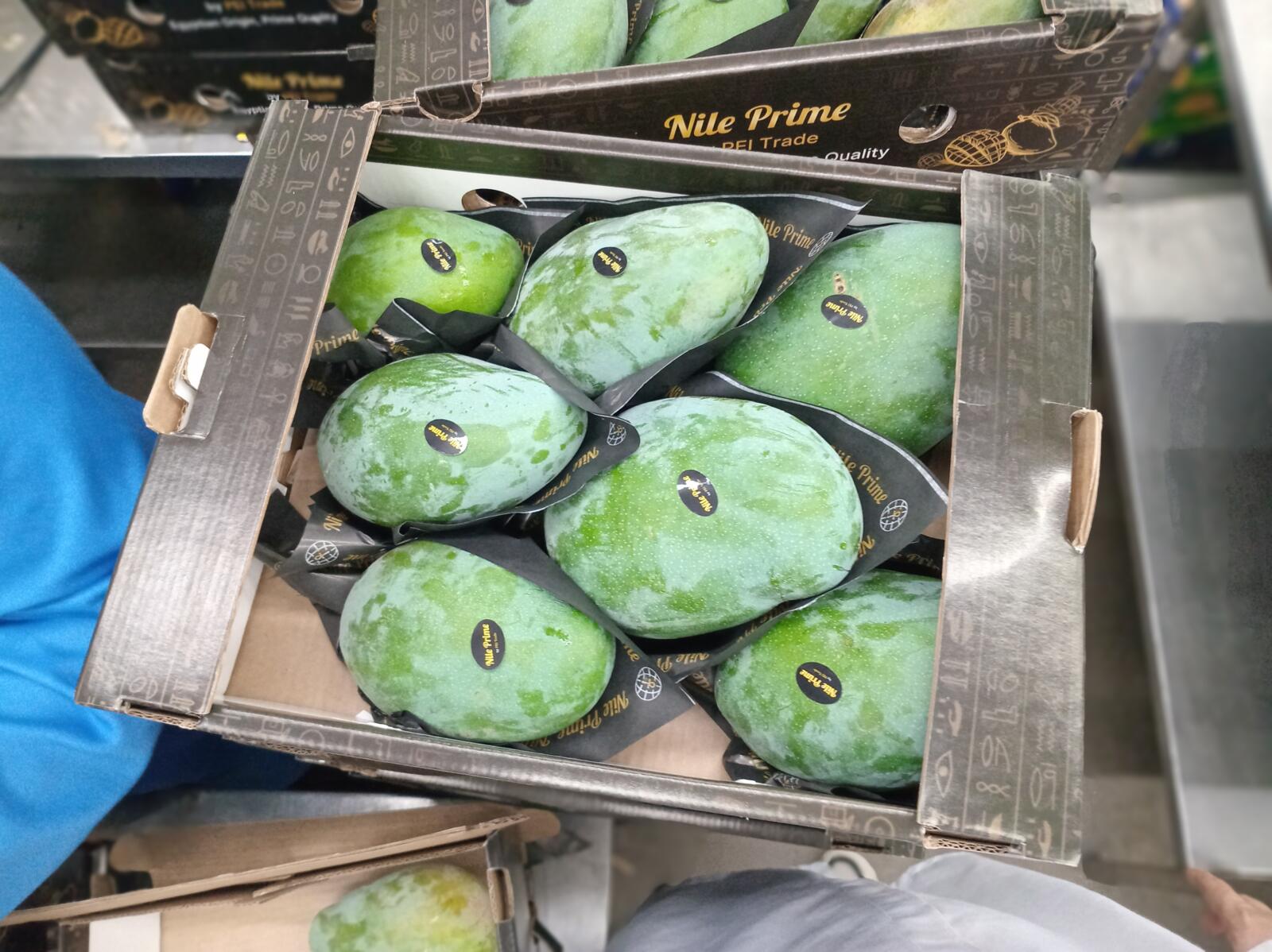
Keitt is the variety that fits this market best. It holds firm through transit, tolerates the longer inland leg after discharge, and the green skin is accepted rather than penalised in Russian and Eastern European retail. Kent sells well into premium retail and the food service channel where a coloured mango is expected, but it is less forgiving on handling.
Size preference skews larger than in the Gulf. Counts of 6, 7 and 8 per 4 kg carton move most easily, with 9 and 10 counts going into value and wholesale channels. Small counts are a difficult sell. Buyers should state the count mix at contract stage rather than accepting an assorted pack, because assorted cartons complicate retail pricing. Specifications for the leading variety are set out in our reference on Egyptian Keitt mango specs.
Pack format
The 4 kg single layer telescopic carton with individual foam sleeves is the standard for this trade. It protects the fruit through the road leg after discharge, which is longer than most buyers plan for. Some Russian distributors take 10 kg two layer cartons for wholesale markets where fruit is broken down and sold loose, and this reduces cost per kilo, but the bruising risk over a long inland haul is real. Discuss it before you commit to a season.
Compliance and labelling
Shipments into the Eurasian Economic Union need a phytosanitary certificate and must satisfy EAEU technical regulations on food safety and residue limits. Consignee side registration requirements and the current MRL position should be confirmed with your customs broker before each season opens, since these are reviewed periodically. Carton and consumer labelling generally needs to appear in Russian, showing product, variety, origin, net weight, class, size or count, packer identification and lot code. EU destinations follow EU marketing standards and require the same core information in the local language.
Timing across the season
The Egyptian window runs roughly July into October, with Keitt carrying the later part of it. Russian and Eastern European buyers who contract in July for September and October arrival tend to get better size availability than those who buy spot in September, when late season Keitt is under demand pressure from several markets at once.
For availability, count mix and an indicative CFR quotation to Novorossiysk, Gdansk or another Eastern European port, contact the Nile Prime export desk on WhatsApp at +20 10 9911 1918.