
Organic Egyptian produce is a growing lane built on an old advantage: Egypt’s dry desert climate suppresses fungal pressure naturally, making organic protocols more achievable here than in humid origins — and reclaimed-desert farms designed from scratch convert cleanly. Organic citrus, dates, herbs, onions, and fresh vegetables now ship to EU and US buyers under full certification. This guide covers what’s available, the certification stack, and the premium math. Part of our import playbook series.
Last updated: July 2026 · By the Nile Prime export team
Table of Contents
- What Ships Organic from Egypt
- The Certification Stack — Verify, Don’t Trust
- The Premium Math
- Organic Egyptian Produce — FAQ
- What Nile Prime Actually Supplies
- Worked Example: Munich Qualification
- Which Crops Convert Best

What Ships Organic from Egypt
| Category | Maturity of Supply | Notes |
|---|---|---|
| Citrus (oranges, lemons) | Established | The organic flagship — real volumes to the EU |
| Dates | Established | Desert crop — naturally low-input, converts easily |
| Fresh herbs & leaves | Established | A quiet Egyptian specialty for EU retail |
| Onions & garlic | Growing | Spring window, organic premium on top |
| Mangoes & grapes | Emerging | Smaller certified volumes — book early |
| Frozen & IQF | Emerging | Certified plants running organic lines on schedule |
The Certification Stack — Verify, Don’t Trust
- EU Organic (equivalence regime): certification by an EU-recognized control body active in Egypt — the certificate names the operator, products, and validity; verify directly with the issuing body.
- USDA NOP for US-bound programs — separate certification, often held in parallel.
- TRACES COI: every EU organic consignment needs its electronic Certificate of Inspection in TRACES before arrival — no COI, no organic clearance; the fruit enters (if at all) as conventional.
- Residue logic: organic doesn’t mean untested — EU labs screen organic imports hard, and any detection triggers investigation. Per-lot testing protects everyone.
- The paper trail: transaction certificates lot by lot — the chain that lets your shelf label survive an audit.
The Premium Math
Organic premiums at origin typically run 20–50% over conventional depending on product and season — driven by lower yields, certification costs, and scarcity of certified volume. The buyer’s discipline: lock certified allocation early (it is always the scarce grade), confirm the COI process is routine for your exporter, and never let an “organic” price that barely exceeds conventional pass unquestioned — in this lane, too-cheap is a certificate problem. Verification basics as ever: the 10-point checklist, plus the control body lookup.
Worked Example: A German Organic Wholesaler Qualifies an Egyptian Supplier
A hypothetical Bio-wholesaler in Munich wants organic Egyptian oranges and sweet potatoes for the Naturkost channel. The qualification file, step by step: Step 1 — the exporter names its certifier and certificate numbers; the wholesaler verifies them directly in the EU’s TRACES system and the certifier’s own registry, because paper certificates are the easiest documents on earth to decorate. Step 2 — the organic operation is confirmed as specific certified parcels with buffer zones, not a whole-farm claim; parcel maps and harvest estimates arrive with the offer. Step 3 — every EU-bound organic consignment needs its electronic certificate of inspection (COI) in TRACES, signed by the certifier before departure — the wholesaler’s broker rehearses the flow on the trial container. Step 4 — arrival pesticide screening: a single residue finding doesn’t just fail a lot, it triggers an investigation that can suspend the supplier — so the wholesaler’s spec makes pre-shipment multi-residue screening a standing requirement. Result in this sketch: a 6-container first season at the organic premium — perhaps 30–50% over conventional — with a compliance file that survives any audit. Invented buyer; the TRACES/COI mechanics and the premium band are the trade’s daily reality.
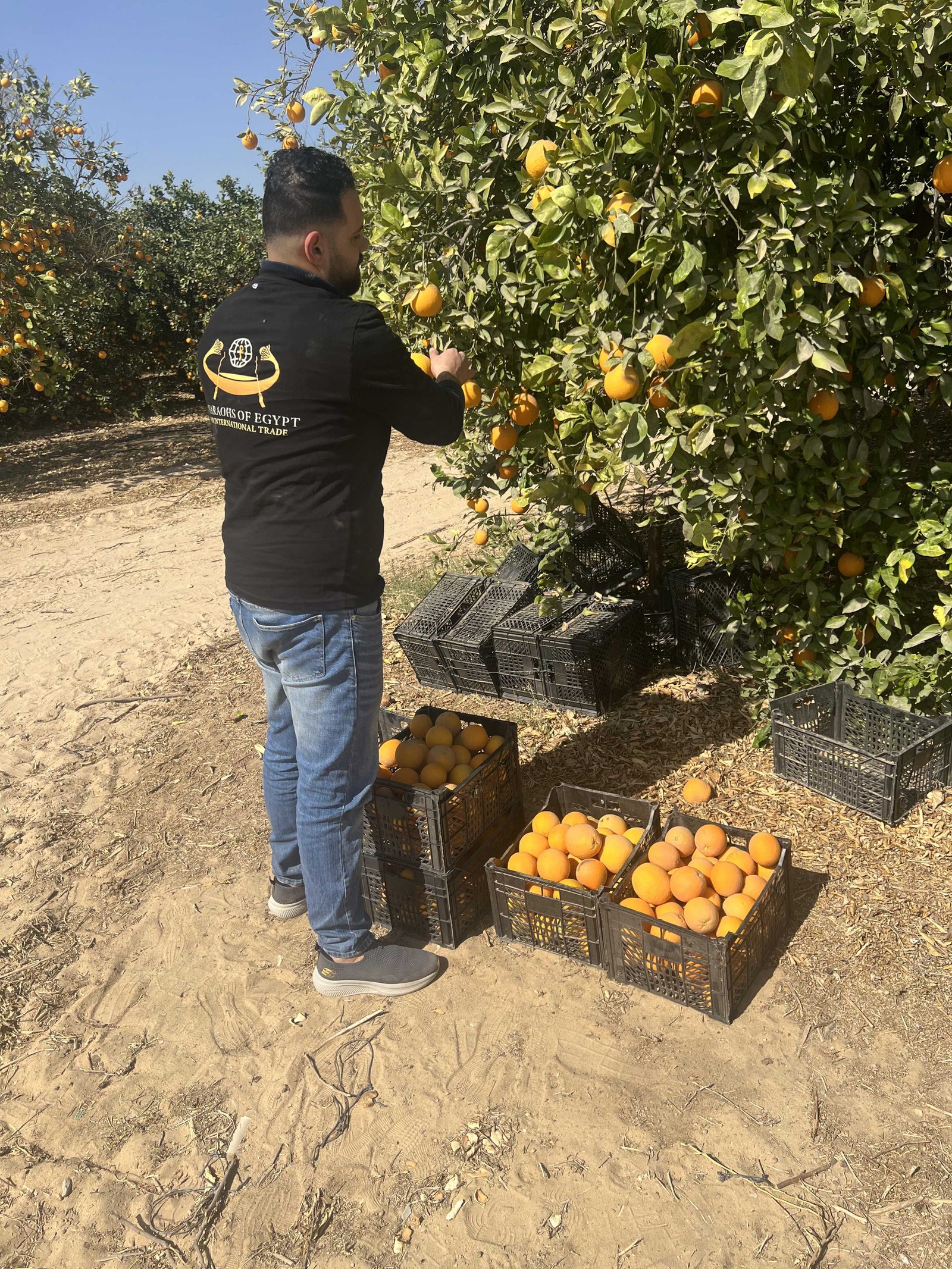
Which Egyptian Crops Convert Best to Organic
Desert reclamation land is Egyptian organic’s quiet advantage: new farms on virgin sand skip the 2–3 year conversion clock’s worst problem — residue history — and isolation from conventional neighbors makes buffer compliance easy. Strong organic lines today: citrus, sweet potatoes, onions and garlic, dates, herbs, and IQF strawberries; harder lines are the high-pest-pressure crops where organic yield penalties bite. Buyers should treat “in conversion” offers seriously — conversion-year fruit sells near conventional prices from farms that will be fully certified within the contract horizon, which is how forward-looking importers lock organic supply before it prices as such.
Organic Egyptian Produce — FAQ
Does Egypt export certified organic produce?
Yes — established organic lanes in citrus, dates, and fresh herbs, with onions, garlic, mangoes, grapes, and frozen lines growing — certified under EU-recognized control bodies and USDA NOP for US programs.
What is a COI and why does it matter?
The electronic Certificate of Inspection in the EU’s TRACES system — mandatory for every organic consignment before arrival. Without it, the shipment cannot clear as organic regardless of farm certification.
How much more does organic Egyptian produce cost?
Typically 20–50% over conventional at origin, varying by product and scarcity — a premium covering lower yields and certification costs. Suspiciously small premiums usually signal certificate problems.
Why is Egypt suited to organic production?
The dry desert climate suppresses fungal disease naturally, reducing the need for interventions — and new reclaimed-desert farms convert to organic protocols more cleanly than legacy farmland.
What Nile Prime Actually Supplies
Nile Prime — the premium brand of PEI Trade — does not hold organic certification and does not supply organic produce. Our crops come from certified conventional farms, certified to GLOBALG.A.P. at farm level and HACCP / ISO 22000 at the packhouse, grown under an integrated pest management programme, and tested against the MRLs of the destination market, with residue reports available per lot: WhatsApp +20 109 911 1918 · [email protected].
Sources: EU organic import regime (TRACES/COI) · PEI Trade.