
The Egyptian vs Indian mangoes question gets argued in every Gulf fruit aisle from May to November — and the honest answer is that the two origins barely compete. India owns the early season and the Alphonso legend; Egypt owns the late season and varieties India cannot grow. For importers, the smart play is not choosing between them but sequencing them. Here is the full comparison — seasons, varieties, flavor, logistics, and price — from the team behind the complete Egyptian mango guide.
Last updated: July 2026 · By the Nile Prime export team
Table of Contents
- Head to Head
- The Honest Verdict, Case by Case
- The Sequencing Play
- Egyptian vs Indian Mangoes — FAQ
- Take the Egyptian Half of the Year
- Worked Example: Stitching Seasons
- Honest Head to Head
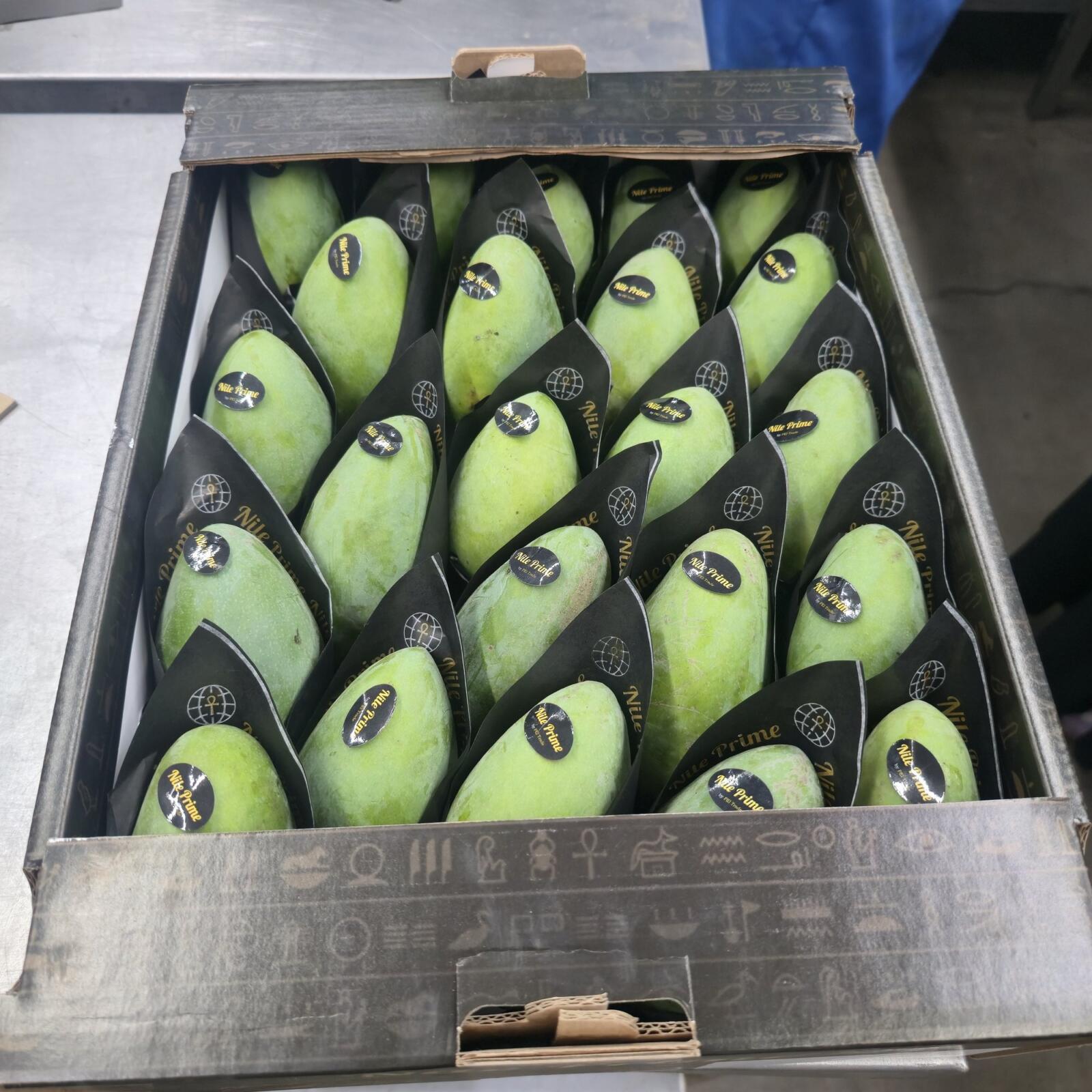
Head to Head
| Egyptian Mangoes | Indian Mangoes | |
|---|---|---|
| Season | June–November (peak Aug–Oct) | April–July (peak May–Jun) |
| Flagship varieties | Owaisi, Zebda (indigenous); Keitt, Kent (international) | Alphonso, Kesar, Badami, Chaunsa-adjacent trade |
| Flavor identity | Honeyed Owaisi (Brix 18–22°); balanced internationals | Alphonso’s saffron-sweet richness — legendary, brief |
| Sea freight capability | Strong — Keitt/Kent built for reefer programs | Limited — most premium fruit must fly |
| Gulf transit | 3–7 days sea, same-day air | 3–5 days sea, short air |
| Europe capability | 10–12 day sea programs at scale | Mostly air-freighted niche |
| Shelf life | Keitt 4–5 weeks — the category’s best | Alphonso days, not weeks |
| Price profile | Sea-freight economics + premium indigenous tier | Premium air-freight fruit, brief windows |
The Honest Verdict, Case by Case
- Peak-flavor bragging rights, May–June: India. A perfect Alphonso in its brief window is a genuine world-class fruit — no serious trader disputes it.
- Peak-flavor bragging rights, Aug–Sep: Egypt. Tree-ripened Owaisi at 18–22° Brix is the fruit Gulf premium retail builds campaigns around — and by then Alphonso is a memory.
- Retail programs & shelf life: Egypt, decisively — Keitt and Kent run sea-freighted weekly programs with weeks of shelf life; India’s premium fruit can’t.
- Europe at scale: Egypt — the Sep–Nov Keitt window has no Indian answer at all.
- The importer’s real answer: run India April–July, switch to Egypt June–November — two origins, one continuous mango year with an overlap for smooth handover.
The Sequencing Play
| Months | Origin | Lead Fruit |
|---|---|---|
| Apr–May | India | Alphonso, Kesar — the premium opening |
| Jun–Jul | Handover | Late Indian + early Egyptian (Naomi, Fagri Kelan) |
| Aug–Sep | Egypt | Owaisi & Zebda premium + Kent volume |
| Oct–Nov | Egypt | Keitt — alone in the world market |
Variety-by-variety Egyptian detail — including the full indigenous lineup — is in the varieties guide, and Gulf channel strategy in the Gulf import guide.
Worked Example: A Gulf Retailer Stitches the Two Seasons
A hypothetical UAE hypermarket chain sells mangoes eleven months a year, and the buying desk’s real job is sequencing origins. April–June: Indian season — Alphonso for the premium wall and the Indian-diaspora gift trade at peak prices, Kesar and Badami for volume; air and fast sea via Mundra–Jebel Ali. Late June: Indian supply wobbles as monsoon ends the season; Pakistani Sindhri bridges some weeks. July: the Egyptian season opens exactly as the subcontinent exits — Sedika and early varieties by air for the premium slots, then August–October: Keitt and Naomi by sea from Sokhna in volume, at landed costs the late-season subcontinent cannot match because it has nothing left to ship. November: Kenyan and then Peruvian fruit take the handoff. In this scenario Egypt isn’t competing with India at all — it owns the quarter India vacates, with a 3–8 day Gulf transit advantage over every alternative origin in that window. That calendar complementarity, not any quality argument, is the real answer to “Egyptian or Indian?” — a serious buyer needs both, in sequence.
Head to Head Where It’s Honest to Compare
| Dimension | Egypt | India |
|---|---|---|
| Season window | July–October | April–June |
| Iconic premium variety | Sedika, Ewais (regional fame) | Alphonso (global fame) |
| Gulf transit | ✔ 3–8 days by sea | Longer sea; heavy air reliance |
| Fibreless volume variety | ✔ Keitt at scale | Kesar, Banganapalli |
| European market access | ✔ Growing sea programs | Hot-water-treatment gated; largely air |
| Diaspora demand pull | Regional | ✔ Massive and global |
Egyptian vs Indian Mangoes — FAQ
Which is better, Egyptian or Indian mangoes?
They peak in different months with different strengths: India’s Alphonso rules the April–June premium window; Egypt’s Owaisi and sea-freighted Keitt/Kent own June–November. Most professional buyers run both in sequence rather than choosing.
Is Egyptian Owaisi comparable to Indian Alphonso?
They are the two great aromatic mangoes of the region — Alphonso saffron-rich, Owaisi honeyed and floral at 18–22° Brix. In their own peak months, each is the best fruit available; they never truly overlap.
Why do European retailers buy Egyptian rather than Indian mangoes?
Sea-freight economics and shelf life: Egyptian Keitt and Kent run 10–12 day reefer programs with weeks of remaining shelf life — India’s premium varieties are too delicate for that trade and mostly fly as niche fruit.
When do Egyptian mangoes replace Indian mangoes in the Gulf?
The handover runs June–July: late Indian fruit tapers as early Egyptian varieties arrive, and by August the Egyptian season — Owaisi campaigns included — carries the Gulf shelf through November.
Take the Egyptian Half of the Year
Nile Prime — the premium brand of PEI Trade — sequences the full June–November program: WhatsApp +20 109 911 1918 · [email protected] · Egyptian mangoes — specifications.
Sources: Tridge — Egypt mango exports · PEI Trade — Mango Export Report.