
Every rejected container starts with a missing paper. Egyptian produce export documents follow one core set — phytosanitary, origin, invoice, packing list, transport document, lab reports — plus destination extras that trip up first-time importers. This master checklist covers what each document is, who issues it, what to verify, and the market-specific additions for the Gulf, EU, Russia, and beyond. It serves every product hub on this site, from mango requirements to citrus.
Last updated: July 2026 · By the Nile Prime export team
Table of Contents
- The Core Document Set — Every Shipment
- Destination Extras
- The Document Timeline — When Each Paper Should Reach You
- Export Documents — FAQ
- Documents Done Right, Every Shipment
- Worked Example: One Container’s Paper Trail
- Five Errors, 90% of Delays
The Core Document Set — Every Shipment
| Document | Issued By | What to Verify |
|---|---|---|
| Phytosanitary Certificate | Egyptian Agricultural Quarantine (CAPQ) | Product, quantity, treatment references (HWT for mango, cold treatment where required), consignee spelled exactly |
| Certificate of Origin | Chamber of Commerce | Legalization/apostille per destination; GSP/trade-agreement forms where applicable |
| Commercial Invoice | Exporter | Incoterm, currency, HS codes, grade & count matching the contract |
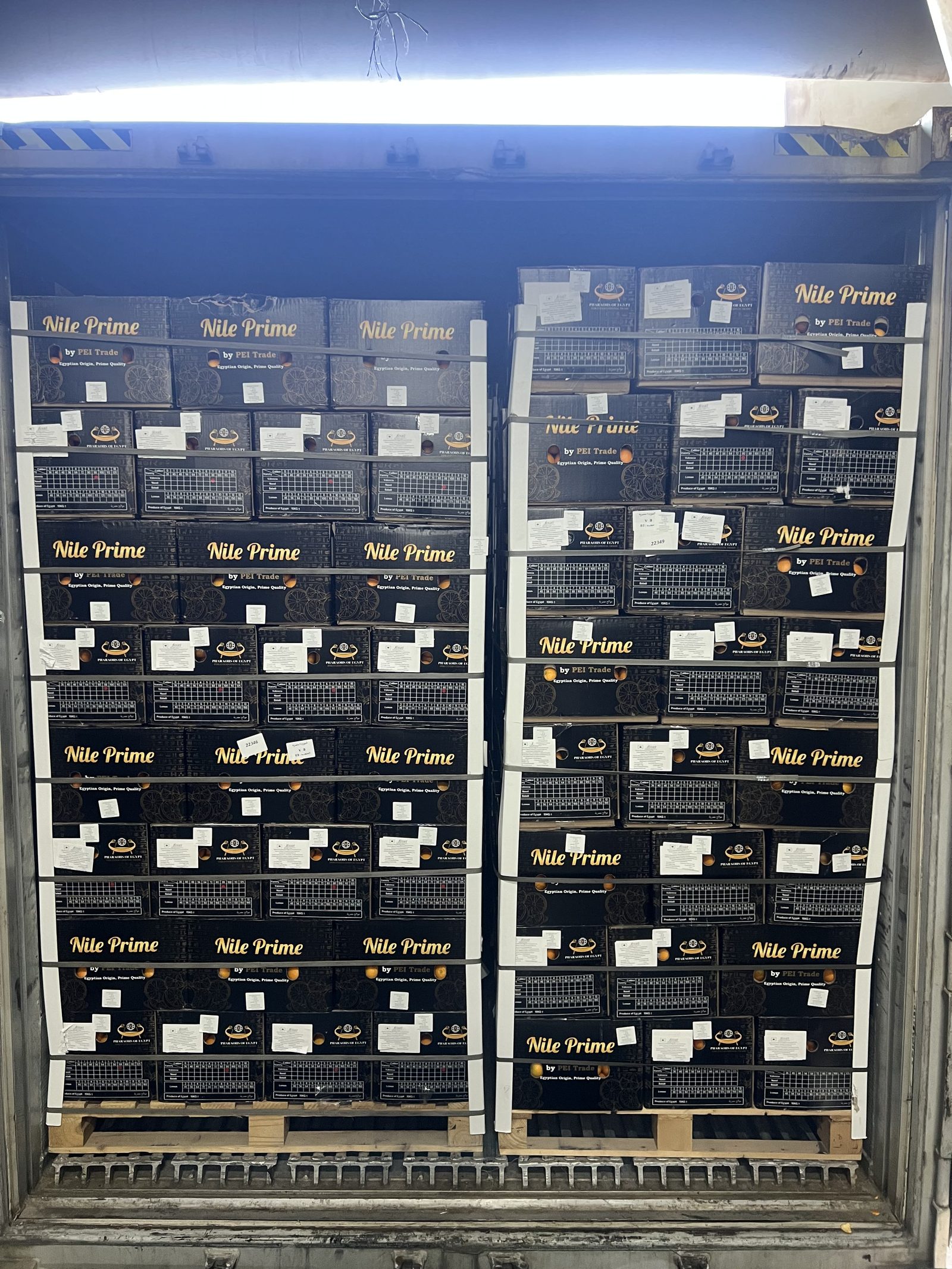
| Packing List | Exporter | Cartons per pallet matching the load plan photo |
| Bill of Lading / AWB | Carrier | Reefer settings written; consignee/notify correct; freight terms |
| Lab Reports (MRL / micro) | Accredited lab | Tested against the destination’s limits, dated for the shipped lot |
Destination Extras
| Market | Additional Requirements |
|---|---|
| Gulf (KSA/UAE) | Importer registration (SFDA/municipality), Arabic labeling, halal documentation where requested; legalized CoO for some states |
| EU / UK | TRACES pre-notification, GLOBALG.A.P/GGN for retail, marketing-standard Class labeling; potato pest-free-area certification |
| Russia / EAEU | EAEU conformity declaration (importer side), strict phytosanitary scrutiny at port |
| China / Far East | Product-specific bilateral protocols; GACC registration where applicable |
| India / others | Fumigation certificates for dry cargo; FSSAI-aligned labeling |
The Document Timeline — When Each Paper Should Reach You
- Before loading: draft invoice + packing list for your review; lab reports for the lots.
- At loading: QC photos, load plan, pulp temperature log.
- Before vessel departure: scans of phytosanitary, CoO, and B/L draft — a professional exporter sends the full set unprompted.
- Originals: by courier or bank (per payment terms) in time for clearance — late originals are the most preventable demurrage cost in the trade.
Who arranges and pays for which document depends on your Incoterm — mapped in the Incoterms guide. The cold-chain evidence that travels with the container is covered in the reefer shipping guide.
Worked Example: One Container’s Paper Trail, Day by Day
Follow a hypothetical reefer of Navel oranges from a Beheira packhouse to Rotterdam through its documents. D-7 (booking): proforma invoice fixes spec, price, and incoterm; the buyer’s bank details verified by voice call — not email, where interception fraud lives. D-3 (pre-loading): quality certificate drafted from packhouse QC; GLOBALG.A.P number confirmed current. D-1: agricultural quarantine inspects and issues the phytosanitary certificate; GOEIC processes export approval; the EUR.1 movement certificate is stamped for preferential EU duty. D-0 (loading): commercial invoice and packing list finalized to match the phyto field by field — same weights, same carton counts, same botanical name; loading photos and seal number archived. D+2: the shipping line releases the bill of lading; scans of the full set fly to Rotterdam. D+9 (one day before arrival): the importer’s broker pre-lodges entry on the scans — fruit clears the terminal within hours of discharge. In this sketch nothing clever happened; six documents simply agreed with each other. That is the entire art. A single mismatched weight — 21,600 kg on the invoice, 21,650 on the phyto — and the same container sits three days for a correction that costs more than the clerk who’d have caught it.
The Five Errors That Cause 90% of Document Delays
- Cross-document mismatches — weights, counts, or names differing between invoice, packing list, phyto, and B/L.
- Wrong or missing HS code — see the HS code guide for the one-digit disasters.
- Preference certificate gaps — GAFTA/EUR.1 absent or mis-stamped, converting duty-free cargo to dutiable.
- Phyto wording short of protocol — destination-specific additional declarations (China, notably) missing.
- Late document transmission — originals couriered after the vessel instead of scans pre-lodged before it; the cheapest fix in the whole trade.
Export Documents — FAQ
What documents are required to import produce from Egypt?
The core set: phytosanitary certificate, certificate of origin, commercial invoice, packing list, bill of lading with reefer settings, and lab reports — plus destination extras like TRACES (EU), SFDA registration (Saudi), or EAEU conformity (Russia).
Who issues the phytosanitary certificate in Egypt?
The Central Administration of Plant Quarantine (Egyptian Agricultural Quarantine), per shipment, after inspection — referencing required treatments such as HWT for mangoes or cold treatment for certain citrus protocols.
When should I receive shipping documents from my exporter?
Scans of the complete set before the vessel sails, and originals in time for clearance. Drafts of invoice and packing list should reach you before loading for review — late originals cause the most preventable demurrage.
What causes customs clearance delays for Egyptian produce?
Mismatches: labels that don’t match documents, consignee spelling errors, missing legalization on the CoO, lab reports tested against the wrong market’s limits, and originals arriving after the cargo.
Documents Done Right, Every Shipment
Nile Prime — the premium brand of PEI Trade — sends the complete scan set before every sailing: WhatsApp +20 109 911 1918 · [email protected].
Sources: Egyptian Agricultural Quarantine procedures · destination-authority requirements (SFDA, EU TRACES, EAEU) · PEI Trade operational practice.