
Egyptian sweet potato export is one of the quietest success stories in the vegetable trade: in under a decade Egypt became one of Europe’s leading sweet potato suppliers, shipping cured Beauregard from late summer deep into spring at freight costs the US — the traditional supplier — cannot match. For EU retail programs that once depended on trans-Atlantic containers, Egyptian fruit arrives in a third of the transit time. This guide covers varieties, curing, specs, and the buying calendar. Part of our vegetables hub.
Last updated: July 2026 · By the Nile Prime export team
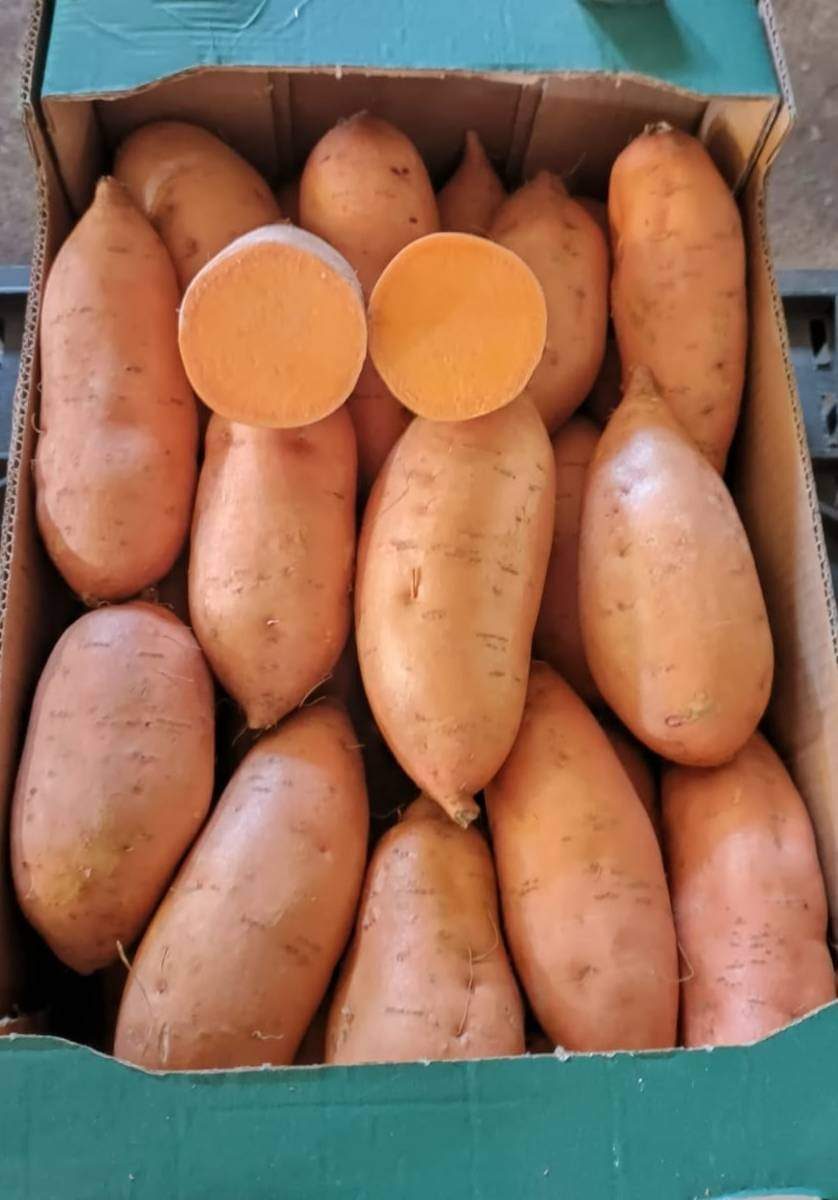
Table of Contents
- Why Egypt Took the European Market
- Export Specs
- The Buying Calendar
- Egyptian Sweet Potato Export — FAQ
- Book Your Sweet Potato Program
- Worked Example: Dutch Program
- Buyer’s Checklist
Why Egypt Took the European Market
- Freight mathematics: 10–12 days to Rotterdam versus 3+ weeks from the US Southeast — fresher arrival, lower cost, smaller carbon line on the retail scorecard.
- Beauregard done right: the orange-flesh standard European consumers expect, grown on sandy reclaimed soils that produce smooth, uniform roots.
- A long window: harvest from August, cured stock shipping into April–May — most of the retail year from one origin.
- Curing culture: proper post-harvest curing (heat + humidity for several days) sets the skin, heals harvest nicks, and converts starches — the single biggest quality differentiator between suppliers.
Export Specs
| Parameter | Standard |
|---|---|
| Variety | Beauregard (orange flesh); Bellevue and others on request |
| Sizes | S (100–200 g) / M (200–400 g) / L (400–600 g) — M leads retail |
| Curing | Cured post-harvest; set skins, healed wounds |
| Packing | 6 kg cartons (EU retail standard); 10–18 kg boxes; big bins for industry |
| Transport | Reefer 12–14°C, 85–90% RH — never below 10°C (chilling injury) |
| Payload | ≈20–22 t per 40-ft reefer |
| Compliance | GLOBALG.A.P, phytosanitary, MRL per destination |
The Buying Calendar
| Period | Supply | Buyer Move |
|---|---|---|
| Aug–Oct | New harvest, fresh-cured | Contract season programs; best selection |
| Nov–Jan | Peak shipping from cured stock | Run weekly EU programs — holiday demand peak |
| Feb–Apr | Stored crop continues | Verify storage discipline per lot |
| May–Jul | Tail/gap | Southern-hemisphere or US fruit bridges |
Sweet potatoes consolidate perfectly with Egyptian onions and the wider vegetable range in mixed containers. Product specs: Egyptian sweet potatoes.
Worked Example: Replacing US Supply in a Dutch Program
A hypothetical Dutch importer supplies sweet potatoes year-round to German and Benelux retail, historically on US (North Carolina) fruit with its 3-week Atlantic transit and dollar pricing. The Egyptian test: year one — 4 trial containers of cured Beauregard, 6 kg cartons, August–December window; arrival quality matches US spec at a lower landed cost with a 7–10 day Mediterranean transit. Year two — 20 containers August–March, with the importer’s own retail program switched to Egyptian origin for those months and US fruit kept only for the Egyptian off-season. The scenario numbers: sea freight from Alexandria at roughly half the US rate, transit time a third, and curing quality — the make-or-break for skin finish and shelf life — verified by insisting on post-harvest curing documentation (roughly a week warm and humid, then cooled storage) before the first booking. Fictional program; the real trend it mirrors is visible in European import statistics, where Egyptian sweet potato volumes have climbed year after year on exactly this substitution.
Sweet Potato Buyer’s Checklist
- Curing confirmed in writing — uncured roots scuff, shrivel, and rot; this single question filters the field.
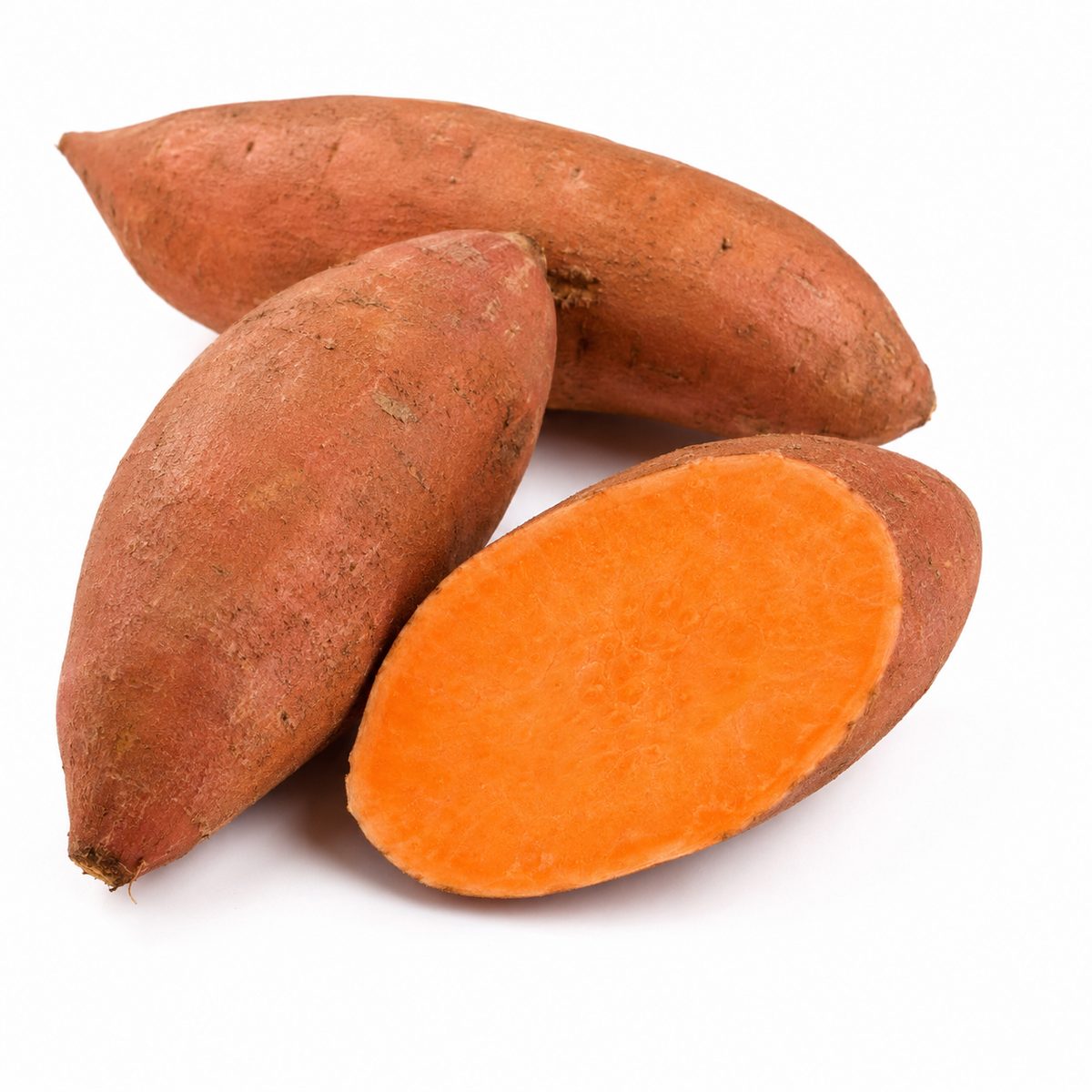
- Variety: Beauregard dominates export; orange flesh, consistent bake quality.
- Size grades: S/M/L bands per destination — UK retail favors medium; food service takes large.
- Packing: 6 kg cartons standard; 15–18 kg boxes for processing.
- Window: August–March from fresh harvest plus stored crop; contract by June for program volumes.
- Storage discipline: 13–15°C holding — never refrigerated cold; chilling injury is invisible at loading and ugly at arrival.
Egyptian Sweet Potato Export — FAQ
When is the Egyptian sweet potato season?
Harvest runs from August, with cured stock shipping through April–May — giving European buyers most of the retail year from one origin, peaking around the November–January holiday demand.
Which sweet potato variety does Egypt export?
Beauregard dominates — the orange-flesh standard European retail expects — in sizes S/M/L with medium (200–400 g) leading retail programs, packed in 6 kg cartons.
Why does curing matter in sweet potatoes?
Post-harvest curing at high heat and humidity sets the skin, heals harvest wounds, and converts starches for flavor — it is the biggest single difference between roots that store for months and roots that break down in transit.
How are Egyptian sweet potatoes shipped?
Reefer containers at 12–14°C and 85–90% humidity — never below 10°C, which causes chilling injury — reaching Rotterdam in 10–12 days at about 20–22 tonnes per 40-ft.
Book Your Sweet Potato Program
Nile Prime — the premium brand of PEI Trade — ships cured Beauregard in EU retail cartons: WhatsApp +20 109 911 1918 · [email protected].
Sources: Tridge — Egypt sweet potato exports · PEI Trade.