
Egyptian mangoes in Europe win on one strategic fact: when Keitt peaks in September–November, almost nobody else has sea-freighted fruit to sell. West African seasons are long over, Brazil is mid-ramp with 14–18 day transits, and air-freighted alternatives cost multiples per kilo. Egyptian fruit reaches Rotterdam in 10–12 days at freight rates that reset the landed-cost math for EU and UK retail. The catch — and it is a serious one — is compliance: Europe runs the world’s strictest residue and certification regime, and only disciplined exporters belong on this lane. This guide covers both sides. Part of the complete Egyptian mango export guide.
Last updated: July 2026 · By the Nile Prime export team
Table of Contents
- The European Window: Where Egypt Fits
- EU Compliance — The Entry Ticket
- Lanes & Landed Cost Logic
- Egyptian Mangoes in Europe — FAQ
- Build Your European Program
- Worked Example: Two-Track Program
- Ripening Rooms
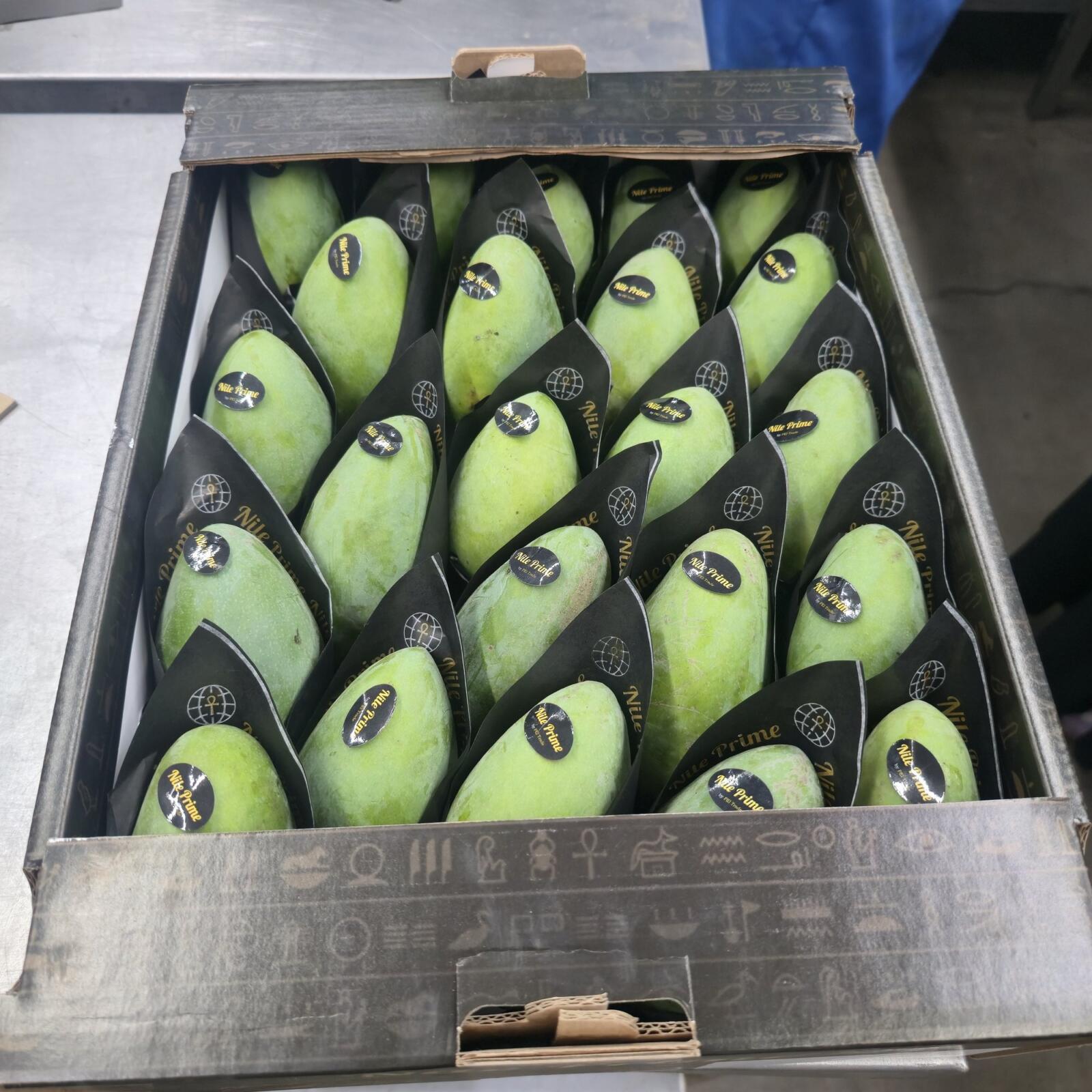
The European Window: Where Egypt Fits
| Months | Who Supplies Europe | Egypt’s Position |
|---|---|---|
| Mar–Jul | West Africa (Côte d’Ivoire, Senegal, Mali), then air-freighted Asia | Early Egyptian fruit enters from June |
| Aug–Nov | Thin — the gap | Egyptian Kent, Shelly and above all Keitt own this window by sea |
| Nov–Mar | Brazil then Peru at full volume | Late Egyptian Keitt overlaps Brazil’s ramp with a freight edge |
Program design follows directly: build EU retail programs around Keitt for September–November, open with Kent and Naomi from August, and use the season calendar to sequence weekly arrivals.
EU Compliance — The Entry Ticket
- MRLs: the EU’s pesticide residue limits are the strictest anywhere, enforced by random border sampling. One exceedance can trigger enhanced checks on ten subsequent consignments — lot-level lab testing before loading is non-negotiable.
- GLOBALG.A.P + GGN: a de facto requirement for retail programs; verify the certificate scope covers mango.
- TRACES pre-notification and accurate Class I labeling per the marketing standard.
- Plastic & packaging rules: EU buyers increasingly specify recyclable cartons and minimal plastic — confirm packing spec upfront via the packing guide.
- Due diligence: traceability to orchard block plus documented labor practice (GRASP/SMETA) is moving from nice-to-have to required. The full list is in the export requirements guide.
Lanes & Landed Cost Logic
| Route | Transit | Serves |
|---|---|---|
| Alexandria → Rotterdam | 10–12 days | Benelux, Germany, France distribution |
| Alexandria → UK ports | 11–13 days | UK retail programs |
| Damietta → Mediterranean hubs | 5–8 days | Italy, Spain, Greece wholesale |
Against Brazil’s 14–18 days and Peru’s 18–22, Egypt’s shorter voyage means fruit harvested closer to ripeness, less shrink, and fresher shelf arrival — an advantage that compounds weekly across a season-long program. Add the freight-rate difference and Egyptian Keitt is consistently the best landed-cost mango in Europe for its window.
Worked Example: A Hamburg Importer’s Two-Track Mango Program
A hypothetical Hamburg tropical-fruit importer supplies German retail (price-driven, volume) and the ethnic wholesale trade (flavor-driven, premium). His Egyptian season runs two tracks at once. Track one — sea-freight Keitt for retail: contracted in May, shipping weekly from Sokhna August–October; fibreless, late-season, thick-skinned Keitt survives the 10–12 day transit to land at “ready-to-ripen” stage for his ripening rooms, competing on price against Brazilian fruit — and winning in this sketch because Egyptian freight is a fraction of Latin America’s in that window. Track two — air-freight premium for the wholesale halls: small weekly consignments of Sedika and Ewais in July–August, tree-ripened and fragrant, sold at multiples of the Keitt price to Middle Eastern and Asian grocers whose customers know exactly what week it is. The two tracks share one supplier, one document routine, one quality dialogue — but different fruit, different logistics, different economics. Confusing them is the classic European mango error: air-grade varieties die at sea, and sea-grade Keitt bores the premium hall. Fictional importer, real architecture — this is how Egyptian mangoes actually enter Europe.
Ripening Rooms — The European Buyer’s Half of the Job
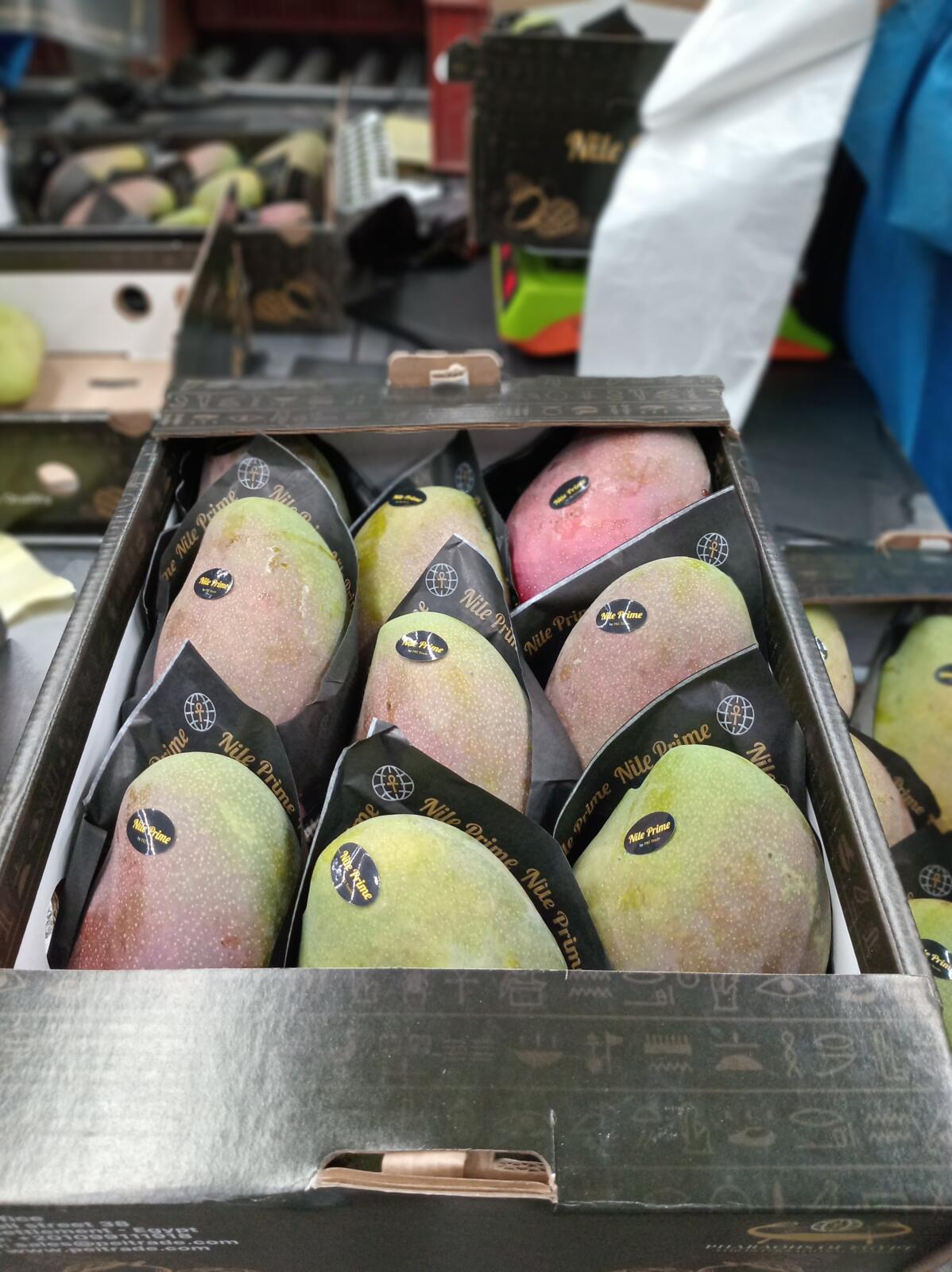
Sea-freight mangoes arrive firm and green-shouldered by design; the last 20% of quality happens in the importer’s ripening rooms — ethylene at controlled temperature over 2–4 days, then distribution at the exact firmness each channel wants (German retail firmer, ethnic wholesale softer and more aromatic). Buyers without ripening capacity should either partner with a service ripener or stick to air-freight fruit, because selling unripened Keitt straight from the container produces the flat, starchy eating experience that gives sea mangoes a bad name — and generates returns no claim can fix, since nothing was wrong with the fruit. The variety-by-variety science sits in the varieties guide; MRL and documentation specifics in the documents checklist.
Egyptian Mangoes in Europe — FAQ
When are Egyptian mangoes available in Europe?
August through November by sea — Kent and Shelly from August, with Keitt carrying the peak September–November window when no other origin ships comparable sea-freighted volume to Europe.
Which Egyptian mango variety is best for EU retail?
Keitt — fibreless, 4–5 weeks of shelf life, and peaking exactly in Europe’s supply gap. Kent and Shelly complement it for blush-colored display fruit earlier in the window.
What certifications do Egyptian mangoes need for the EU?
GLOBALG.A.P with mango in scope (plus GGN for retail), HACCP or ISO 22000 at the packhouse, per-lot MRL testing against EU limits, phytosanitary certificate with HWT, and TRACES pre-notification.
How do Egyptian mangoes compare with Brazilian mangoes in Europe?
They are largely complementary: Egypt owns September–November, Brazil dominates December onward. Where they overlap, Egypt’s 10–12 day transit against Brazil’s 14–18 gives fresher arrival and lower freight per carton.
Build Your European Program
Nile Prime ships EU-compliant programs — GLOBALG.A.P farms, per-lot MRL testing, Class I grading and recyclable packing — with Keitt allocation through November. Send your specification: WhatsApp +20 109 911 1918 · [email protected] · Egyptian mangoes — specifications.
Sources: PEI Trade — Egyptian Mango Export Report 2026 · Tridge — Egypt mango export intelligence.