
Understanding Egyptian mango varieties is the difference between a program that sells itself and a container of fruit your market doesn’t recognize. Egypt grows two distinct families: international varieties bred for shelf life and appearance, and indigenous varieties found nowhere else on earth — the reason Gulf retailers fly fruit out of Cairo every August. This guide profiles all ten commercial varieties with the specs importers actually use: size, Brix, fibre, peak weeks, shelf life, and the market each one wins in. It expands the varieties section of our complete Egyptian mango export guide.
Last updated: July 2026 · By the Nile Prime export team
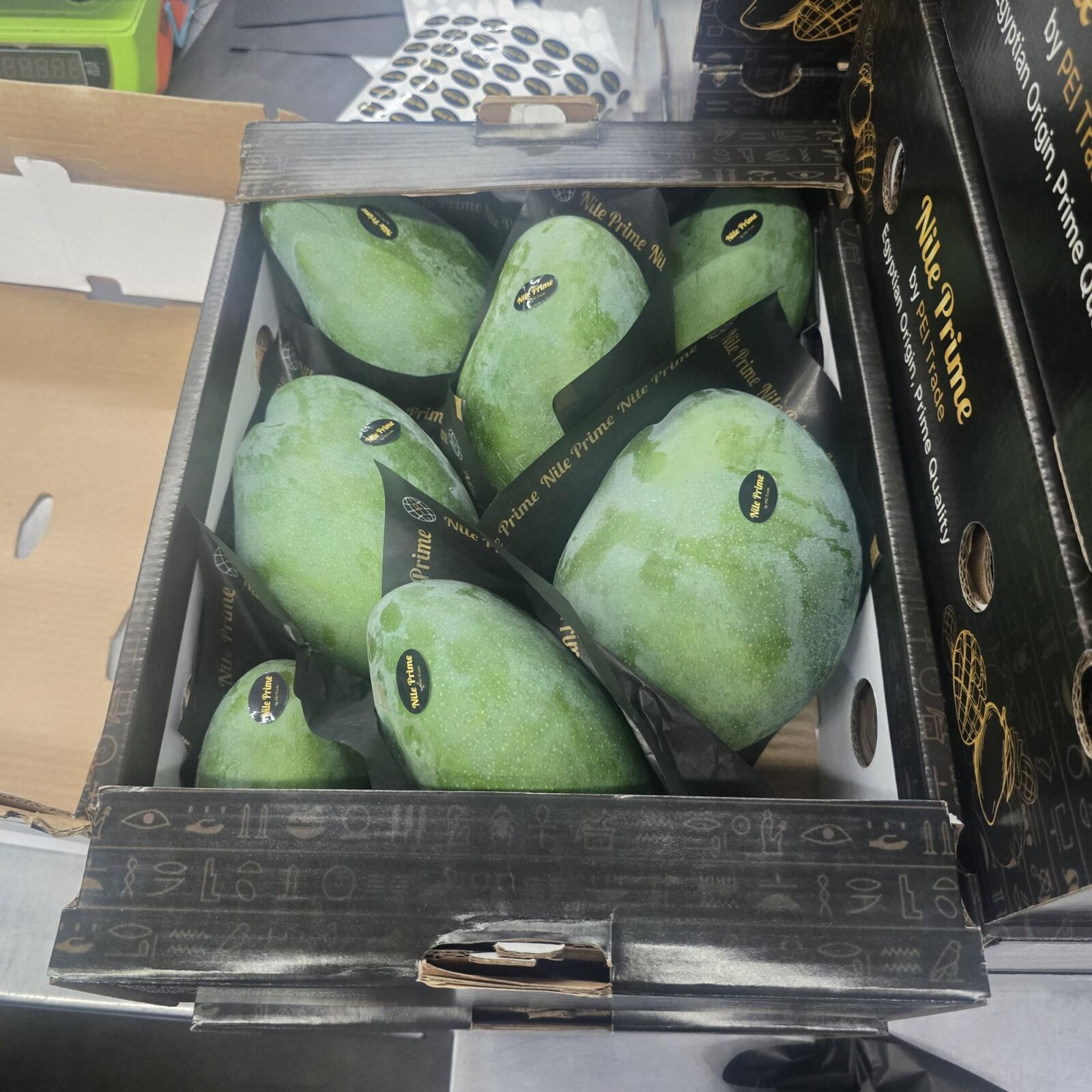
Table of Contents
- Egyptian Mango Varieties at a Glance
- The International Varieties
- The Indigenous Varieties — Egypt’s Exclusive
- How to Choose: Variety by Market & Goal
- Egyptian Mango Varieties — FAQ
- Order the Varieties Your Market Wants
Egyptian Mango Varieties at a Glance
| Variety | Family | Size | Brix | Fibre | Peak | Wins In |
|---|---|---|---|---|---|---|
| Keitt | International | 500–900 g | 13–15° | None | Sep–Nov | EU, Russia, UK |
| Kent | International | 450–700 g | 14–16° | Minimal | Aug–Oct | EU, Gulf, Russia |
| Naomi | International | 400–600 g | 13–15° | None | Jul–Aug | EU, Gulf |
| Shelly | International | 450–650 g | 14–16° | None | Sep–Oct | EU, UK |
| Tommy Atkins | International | 400–600 g | 12–14° | Some | Jul–Sep | Russia, E. Europe |
| Owaisi | Indigenous | 300–500 g | 18–22° | Low | Aug–Sep | Gulf premium |
| Zebda | Indigenous | 400–800 g | 16–20° | Very low | Aug–Sep | Gulf, diaspora |
| Sedeeka | Indigenous | 250–450 g | 17–20° | Low | Aug–Sep | Gulf |
| Fagri Kelan | Indigenous | 500–900 g | 15–18° | Some | Jul–Aug | Gulf, local premium |
| Timour | Indigenous | 350–550 g | 16–19° | Low | Jul–Aug | Gulf |
The International Varieties
Keitt — The Late-Season King
Large, green-skinned even when ripe, completely fibreless, and blessed with the longest shelf life in commercial mango — four to five weeks under cold chain. Keitt is why Egypt owns the September–November window: when Brazil is still ramping up and every northern origin is finished, Egyptian Keitt arrives by sea at freight costs nobody can match. Retail buyers note: educate consumers that green means ripe — a shelf card solves it.
Kent — The All-Rounder
Red-green blush, juicy, sweet, nearly fibreless — Kent is the variety that satisfies everyone. It peaks August–October at the heart of the Egyptian season and works in every market from Riyadh to Rotterdam. If a program has room for only one international variety, Kent is usually the answer.
Naomi — The Early Opener
An Israeli-bred variety that took exceptionally well to Egyptian conditions. Bright red blush over yellow, mild clean sweetness, and — critically — early: Naomi ships from July, opening the season while prices are at their annual high. Its looks make it a natural for premium retail display.
Shelly — The Late Premium
Firm, sweet, red-yellow fruit that follows Kent into the late season. Shelly holds sizing consistency exceptionally well, which is why UK and EU programs that need uniform counts carton after carton keep coming back to it.
Tommy Atkins — The Tough Traveler
The world’s most traded mango for a reason: deep red color and near-indestructible handling tolerance. Flavor is milder and fibre is present, but for long lanes and value programs — Russia, Eastern Europe — Tommy’s arrival condition wins the repeat order.
The Indigenous Varieties — Egypt’s Exclusive
These five grow commercially only in Egypt. They are softer, more aromatic, and dramatically sweeter than international varieties — Brix readings of 18–22° against 13–16°. They demand faster handling and often air freight, and they command prices to match.
Owaisi — The Crown Jewel
Ask any Egyptian to name the best mango in the world and the answer is Owaisi. Honeyed, floral, intensely aromatic — there is no comparable international variety. Gulf premium retailers build entire August campaigns around its arrival, flying tree-ripened fruit for weekend launches. Volume is limited by nature; allocation goes to committed buyers first.
Zebda — The Butter Mango
Named for its texture — zebda means butter in Arabic. Pale green skin hides dense, ultra-smooth flesh with almost no fibre and deep sweetness. Larger than Owaisi and slightly more robust, it is the second pillar of any Gulf premium program and a favorite of the Egyptian diaspora worldwide.
Sedeeka, Fagri Kelan & Timour — The Heritage Trio
Sedeeka is small, fragrant, and fiercely loved in traditional markets. Fagri Kelan brings indigenous flavor at international size — individual fruit approaching a kilogram. Timour bridges the early window with soft, aromatic mid-July fruit. Together they let an exporter offer indigenous character across the whole first half of the season, before Owaisi and Zebda peak.
How to Choose: Variety by Market & Goal
| Your Goal | Build Around | Why |
|---|---|---|
| EU / UK retail program | Keitt + Kent + Shelly | Shelf life, sizing consistency, MRL track record |
| Russia / EAEU volume | Kent + Keitt + Tommy Atkins | Arrival condition after 12–14 day transit |
| Gulf premium retail | Owaisi + Zebda (air) + Kent (sea) | Indigenous exclusivity plus volume backbone |
| Longest season coverage | Naomi → Kent → Owaisi → Keitt | Sequenced July-to-November program |
| First trial order | Kent or Keitt | Most forgiving fruit, easiest market acceptance |
Whichever combination fits, timing decides everything — cross-check each variety’s window in the week-by-week season calendar and match the carton spec in the packing specifications guide.
Egyptian Mango Varieties — FAQ
What are the main Egyptian mango varieties for export?
Ten varieties dominate: the international Keitt, Kent, Naomi, Shelly, and Tommy Atkins, plus the indigenous Owaisi, Zebda, Sedeeka, Fagri Kelan, and Timour — the latter five grown commercially only in Egypt.
Which Egyptian mango variety is the sweetest?
Owaisi leads with Brix readings of 18–22°, followed closely by Zebda and Sedeeka. International varieties like Keitt and Kent run 13–16° — sweet, but built primarily for shelf life and appearance.
Which variety is best for a first-time import order?
Kent or Keitt. Both are fibreless, handle sea freight well, arrive in strong condition, and are instantly recognizable to consumers in almost every market.
Why are indigenous Egyptian varieties more expensive?
Scarcity and flavor. Owaisi, Zebda, and Sedeeka grow commercially only in Egypt, volumes are naturally limited, and their aromatic, high-Brix profile has no international substitute — so Gulf premium retail bids the price up every August.
Order the Varieties Your Market Wants
Nile Prime ships all ten varieties across the full June–November season — sequenced programs, branded premium cartons, air and sea. Tell us your market and we’ll recommend the right mix: WhatsApp +20 109 911 1918 · [email protected] · Egyptian mangoes — specifications & packing.
Sources: PEI Trade — Egyptian Mango Export Report 2026 · Tridge — Egypt mango intelligence.