
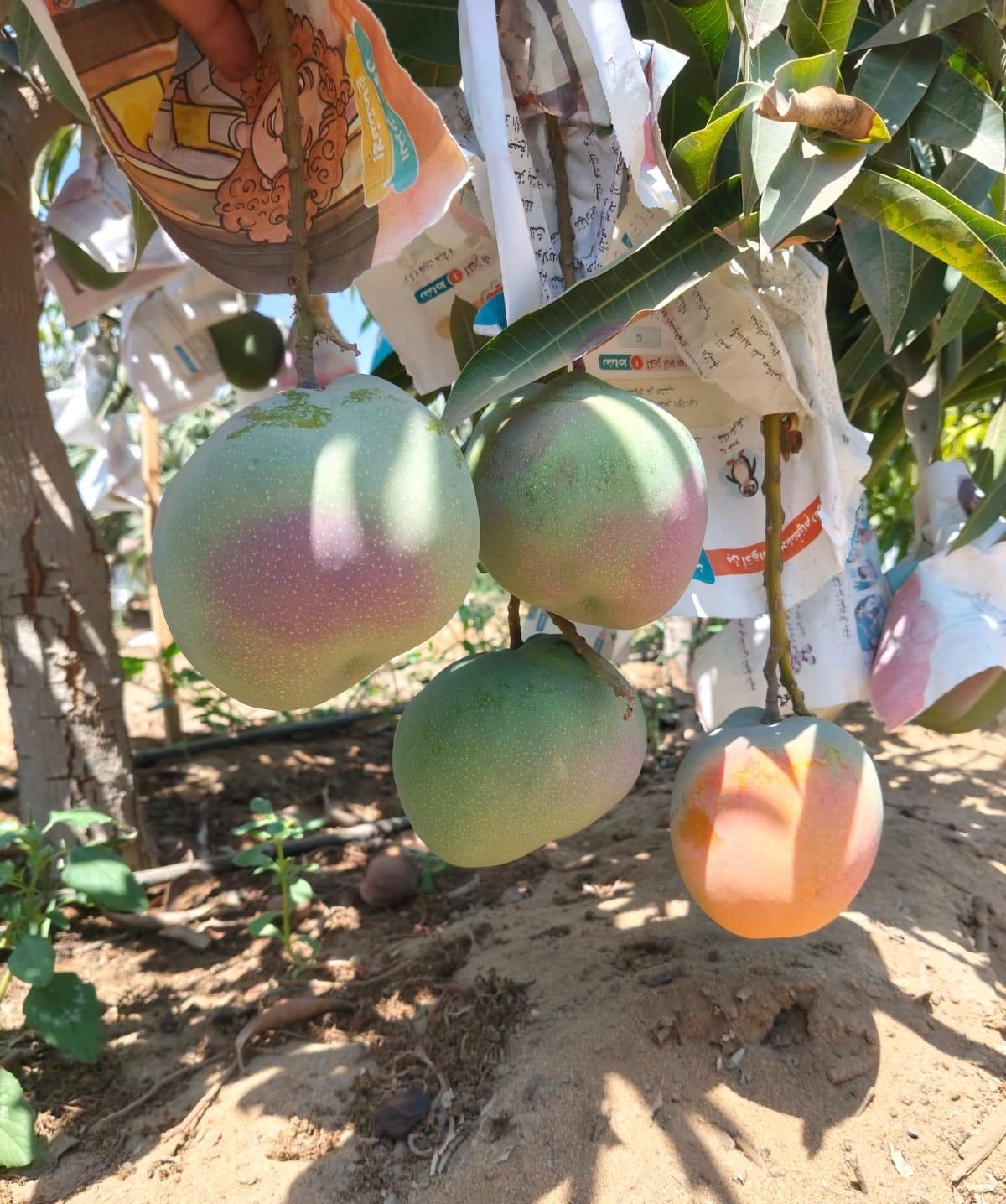
With Keitt in its final weeks and Kent and Naomi finished, most of the 2026 Egyptian mango season is now decided. This is the useful moment to look forward. Buyers who open the 2027 conversation in August and September get variety choice and week allocation. Buyers who wait until May take whatever is left after the programmes are written.
What the variety mix looks like going into 2027
The Egyptian export crop rests on three commercial varieties. Kent opens the season, roughly late June into July, with strong colour and a fibre-free eating profile that suits retail. Naomi follows in a short mid-season window with attractive blush and good size. Keitt carries the tail from late July through September, green-skinned at maturity, firm, and the variety that travels best on long transits. Variety profiles are set out in our note on Naomi mango.
Local varieties such as Zebda, Sukkary and Alphonse are grown in real volume but move mostly into the domestic market and processing. They rarely fit an export carton specification, so we do not offer them on programme unless a buyer specifically requests them and accepts the shorter shelf life.
Where planted area is heading
New mango planting in Egypt has concentrated in the reclamation areas east and west of the Delta over the past decade, and a meaningful share of those blocks is Keitt and Kent selected for export rather than for the local market. Young trees take several seasons to reach commercial bearing, so the effect is gradual rather than a step change. The practical read for a buyer is that late-season Keitt availability is likely to keep growing, and that the early Kent window will stay the tighter of the two. If your programme depends on July fruit, contract it earlier than you contract September fruit.
Timing your enquiry
A workable calendar looks like this. Between September and November, agree indicative volumes, variety split and target weeks so the packhouse can plan. Between December and February, firm up carton format, size counts, labelling and any certification requirements, since GLOBALG.A.P and retailer audit cycles run in the first quarter. From March onward, fix pricing mechanism, Incoterms 2020 basis and the deposit that secures allocation. By May the season is effectively sold in its most attractive weeks.
An indicative volume commitment is not a fixed order. It tells us how much fruit to reserve against your name and lets you adjust as the crop develops. The trade-off between a season programme and buying spot is covered in season programme or spot container.
What to send us
A useful 2027 enquiry states the variety or varieties you want, monthly or weekly volume in cartons or pallets, size counts, carton format, discharge port, Incoterms basis and any certification your customer requires. If you plan to move fruit into a ripening room on arrival, tell us, because it changes the maturity we pick at.
One caution on forecasting. Volume and sizing in any given season depend on flowering conditions in February and March and on temperatures through fruit set. Nobody can promise 2027 tonnage in August 2026. What can be agreed now is priority of allocation, which is the part that matters when a season comes in short.
Open the conversation
Send your 2027 outline and we will come back with what we can reserve and an indicative calendar. WhatsApp +20 10 9911 1918.