
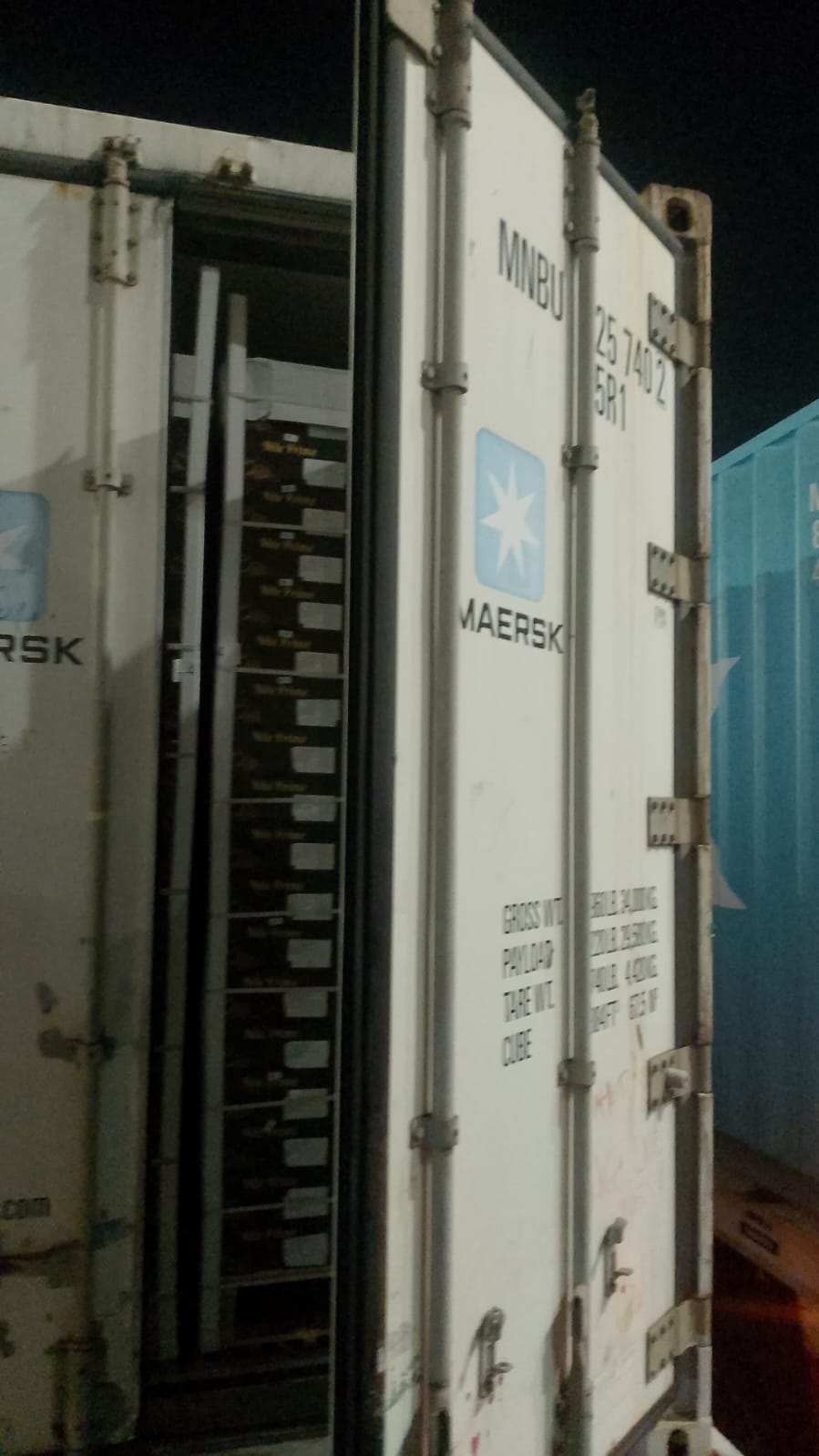
A mango container that loses a week in transit does not arrive one week late. It arrives with a week less selling life, and on late-season Keitt that is often the difference between a normal sale and a negotiation. Delays on Egyptian mango come from three places: a rollover at the load port, a missed connection at the transhipment hub, and port congestion at destination. Each one is handled differently, and the useful decisions are taken in the first 48 hours, not on arrival.
What Is the Realistic Shelf-Life Budget on Egyptian Mango?
Mango leaves the packhouse with a finite transit budget that depends on variety, maturity at harvest and pulp temperature through the chain. The figures below are the working assumptions we use for planning, not guarantees, and every one of them shortens if pull-down was slow or the fruit was picked mature.
| Variety | Typical carrying temperature | Usable transit budget | Remaining life at arrival if on time |
|---|---|---|---|
| Keitt | 10 to 12 degrees Celsius | 21 to 28 days | 5 to 8 days before ripening |
| Kent | 10 to 12 degrees Celsius | 18 to 24 days | 4 to 7 days before ripening |
| Naomi | 10 to 12 degrees Celsius | 16 to 21 days | 3 to 6 days before ripening |
A five-day delay does not remove five days from the far end evenly. Respiration and ripening continue in the box, so the fruit that arrives is further along its curve, softer at the shoulder and closer to the point where a ripening room is no longer needed.
Can the Set Point Be Lowered to Buy Time?
No, and this is the most common expensive mistake. Mango is chilling sensitive. Carrying below roughly 8 to 10 degrees Celsius for an extended period produces chilling injury that shows as dull grey skin patches, uneven ripening and off flavour, and it usually appears only after the doors open, when it is too late to prove where it happened. If a line offers to drop the set point on a delayed box, decline it and record that you declined it.
What can legitimately be adjusted is fresh air exchange, and only with the shipper’s technical agreement. Everything else is a matter of managing the arrival rather than the voyage.
What Should Happen in the First 48 Hours After a Rollover?
Get the new sailing schedule in writing, including the transhipment port and the connecting vessel, not just a revised estimated arrival. A rollover with a named connection is a delay. A rollover without one is an open-ended risk.
Confirm the container is plugged in and running at the original set point during the wait, and ask for the reefer monitoring record for the yard period. This is the exact situation the shipment loggers exist for, and how to read them is covered in our note on temperature loggers on Egyptian mango shipments.
Recalculate the arrival plan against the shortened budget. If the fruit will land with three days of life instead of seven, the sale needs to be arranged before arrival, not after, and the ripening programme probably needs to be cancelled rather than shortened.
Tell the exporter the same day. A supplier who learns about a delay at discharge cannot help. A supplier who learns about it at the transhipment port can often release a later container earlier, adjust the following booking or arrange a partial diversion.
Who Carries the Cost?
On FOB and CFR terms the carriage risk sits with the buyer once the goods pass the ship’s rail, so a rollover is a carrier matter, not a supplier defect. Carrier liability for delay is narrow under most bills of lading and rarely covers loss of market. Marine cargo policies also usually exclude delay as a cause, though they will respond to physical damage such as machinery failure. That combination is why delay is managed commercially rather than claimed. Where the fruit does arrive out of condition, the assessment process is the one described in arrival condition and claims on Egyptian mango.
How Do You Reduce the Exposure Next Time?
Book direct services where they exist, even at a premium, on the last shipments of the season when fruit is most mature. Split large orders across two sailings rather than one. Fix a booking cut-off with the supplier that leaves a spare sailing in the week. And on September Keitt, where the tail of the season leaves the least margin for error, plan the programme around arrival dates you can afford to miss by a week.
Contact
For sailing options, direct service availability and late-season Keitt positions, message the Nile Prime export desk on WhatsApp at +20 10 9911 1918 with your destination port and required arrival window.