
This is the Nile Prime market note for the week of 16 September 2026, written for importers, wholesalers and category buyers tracking Egyptian supply. It covers what is on the line this week, what has changed since our update of 14 September, and what to fix before the citrus season opens.
Pomegranate
Pomegranate is now clearly past peak. Volume has eased from the first-week-of-September high, and packers are running shorter days on the pomegranate line than they were a fortnight ago. Grading has not loosened with the volume, which is the right call: colour cover and diameter standards are being held, and out-grades are going to the domestic and juice trade rather than into export cartons.
Wonderful remains the export variety. Programme buyers working to mid-November should be confirming weekly volumes now, because the tail of the season is where allocation gets decided in favour of buyers with standing commitments. Size profile is stable, with good availability in the mid counts and tighter supply at the largest sizes.
Mango
Late Keitt is in its final positions. Fruit is available for loading through the rest of September and, on a limited basis, into the first days of October. Count profiles have skewed smaller as the crop runs down, which is normal for the season tail. Treat anything remaining as spot volume. Air freight only makes sense here where a specific customer commitment has to be honoured, and the arithmetic on that is set out in our note on air versus sea freight on Egyptian mango.
Citrus
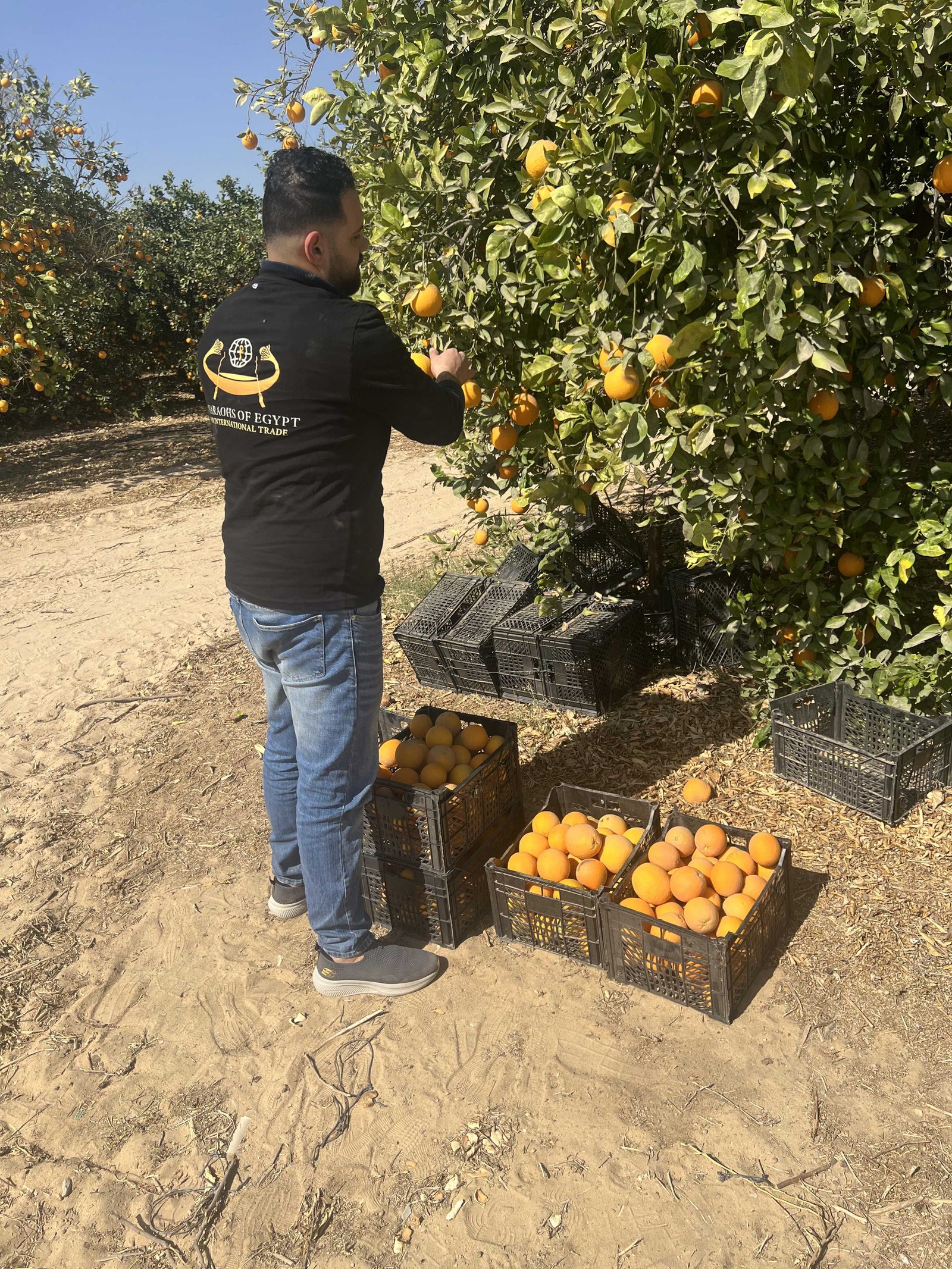
Navel maturity testing is continuing across the main growing areas. Samples are being drawn and tested for Brix, titratable acidity and the ratio between them, which is what actually decides the picking date rather than the calendar. Colour break is approaching but has not arrived in volume.
Our expectation, on the current picture, is a normal season shape: early Navel from late November or early December, Baladi mandarin running just ahead of it from November, and Valencia from February through May. Nothing this week changes that view.
Two practical points for buyers. First, indications are open now but firm pricing on Navel comes in October, once maturity results and packout estimates are in. Second, reefer space for the December to February peak is worth securing early, because allocation on the main citrus lanes tightens well before the fruit is ready to ship.
Autumn roots and storage crops
Sweet potato lifting is under way with curing rooms running, ahead of an October export window. Onion and garlic are moving out of store and selling on cure quality more than on size. These lines ship in ventilated dry containers on most destinations, which puts them on a different freight basis from the reefer fruit programme.
What to do this week
Confirm pomegranate volumes to mid-November if you are running a programme. Close out any remaining mango requirement as spot. Send your citrus specification now, even without a price: variety, size code, carton format, Brix and maturity minimum, degreening yes or no, set point and the Incoterm written out in full under Incoterms 2020. A specification agreed in September is worth more than a price agreed in November.
Nile Prime ships Egyptian citrus, pomegranate and mango through Alexandria, Damietta and Sokhna. To receive weekly availability or to open a 2026/2027 citrus position, message our export desk on WhatsApp at +20 10 9911 1918 with your destination, crop, specification and monthly volume.