
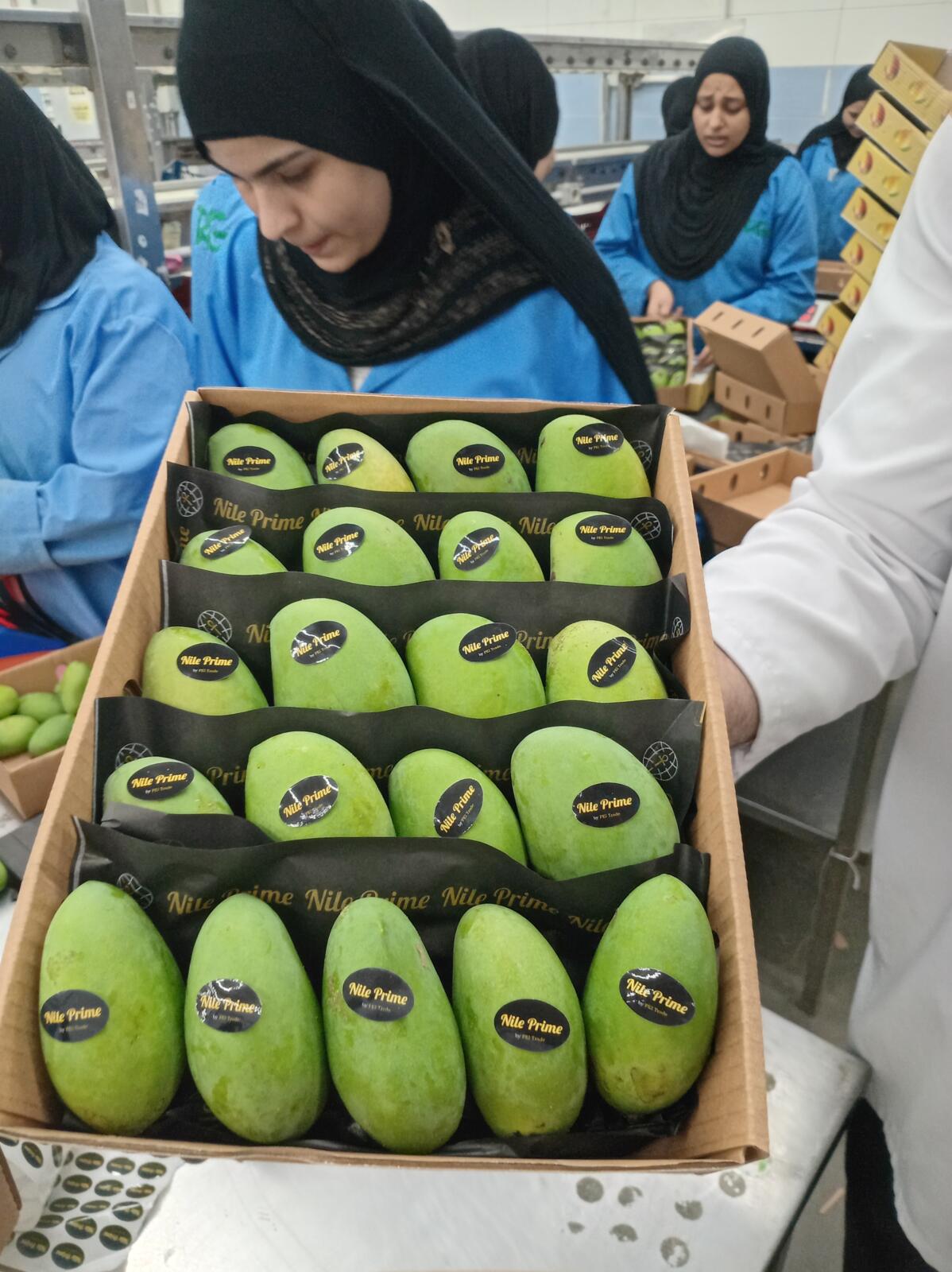
When a mango container lands soft, the argument that follows is almost always about temperature. The exporter points to the reefer set point and the container printout. The importer points to the fruit. Neither settles anything, because a set point records what the machine was told to do, not what the fruit experienced. That gap is what an independent data logger closes, and it is worth understanding how to use one properly before you need it.
What a logger records and what the reefer records
The reefer unit logs supply and return air temperature at the evaporator, typically at hourly intervals, and that trace is downloadable from the machine by the shipping line. It is useful for showing that the unit ran and held its set point. It tells you very little about the pallet in the middle of the load, which is the one that arrives warm.
A stand-alone logger placed among the cartons records the air immediately around the fruit at the interval you choose, usually every fifteen or thirty minutes. Single-use USB loggers are the common choice on mango and cost little per container. Real-time GSM units cost more but alert you while the box is still on the water, which is the difference between managing a problem and documenting one.
Placement is the whole exercise
A logger taped to the door frame proves nothing. On a mango load we place three: one at the front of the container in the top layer near the return air path, one in the geometric centre of the load at mid pallet height, and one at the door end in the bottom layer. The centre unit is the one that matters, because that is where heat is retained longest if the fruit went in warm.
Each logger should sit inside a carton among the fruit, not in a void between pallets, and its position must be written on the packing list with the serial number so that the trace can be tied to a location afterwards. A logger whose position nobody recorded is a set of numbers without a meaning.
Reading the trace on arrival
Download the loggers before the container is unloaded, not after the fruit has been moved into a cold room, and keep the raw file rather than only a printed chart. Three shapes tell most of the story. A trace that starts high and takes twenty-four hours or more to reach set point means the fruit was not properly pre-cooled before loading, which is an origin problem regardless of how well the reefer performed. A flat trace at set point with a soft arrival points to fruit maturity at harvest rather than the cold chain. A step upward mid voyage usually means a power interruption during transhipment, which is a carrier matter.
Mango is normally carried between 10 and 12 degrees Celsius depending on variety and maturity, and Keitt sits at the upper end of that range. Below about 8 degrees the risk moves from soft arrival to chilling injury, which shows as dull skin and uneven ripening and is harder to argue about later. Our note on reefer loading, stowage and vent settings covers how the load itself is built.
What the trace will and will not settle
A properly placed and documented logger trace is strong evidence in a claim. It establishes when a deviation started, how long it lasted, and therefore whose period of responsibility it falls in. What it cannot do is prove the fruit was fit at loading. That is the job of the pre-shipment inspection report with its cut-fruit and pulp temperature readings, taken together with the logger. Buyers who hold both documents settle disputes quickly. Those who hold neither usually split the difference and stay unhappy. The process itself is set out in our guide to arrival condition and claims on Egyptian mango.
Nile Prime fits loggers on request and records serial numbers and positions on the packing list as standard. To specify logger placement on your next Keitt loading, message the desk on WhatsApp at +20 10 9911 1918.