
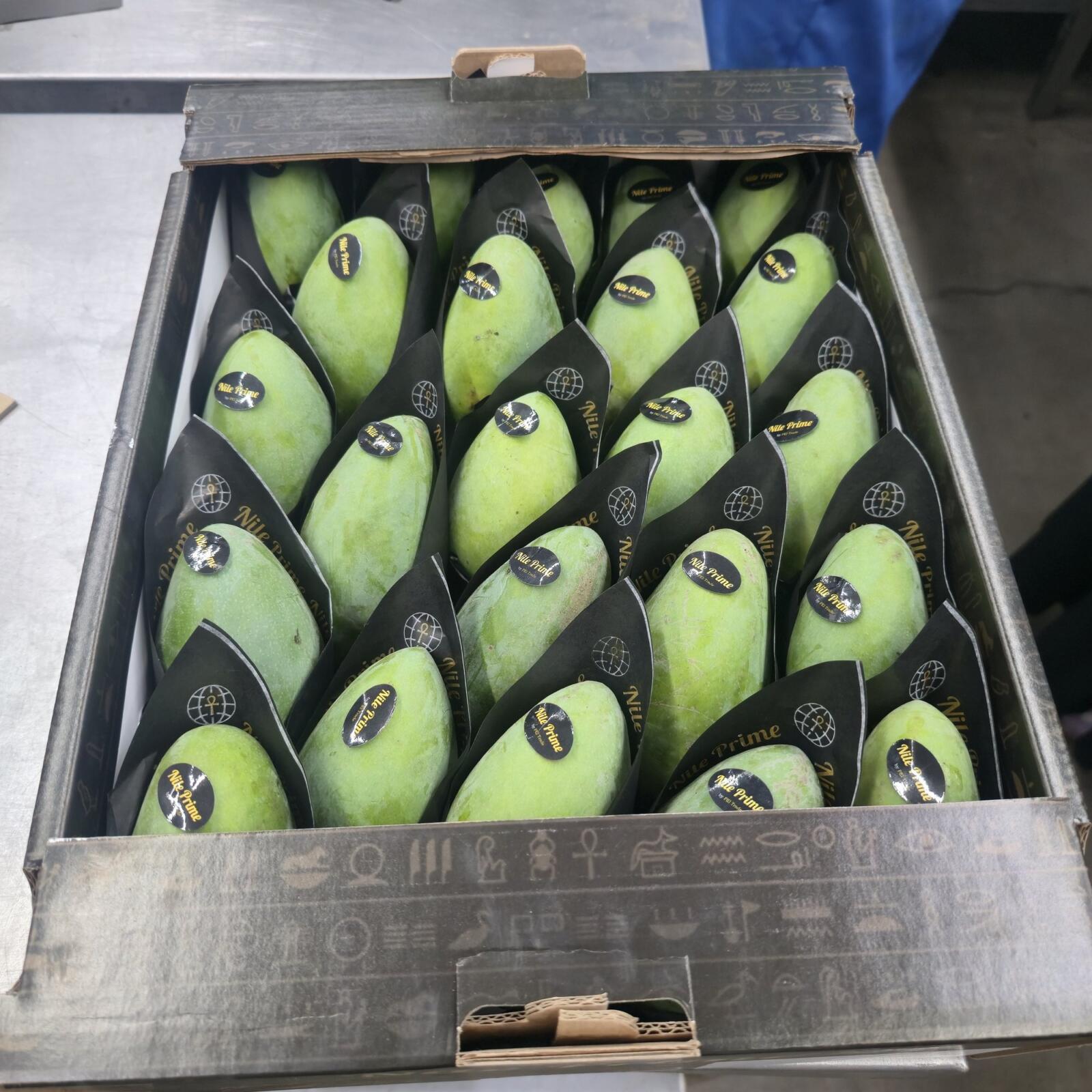
Fresh export takes the headlines, but a meaningful share of every Egyptian mango harvest goes to processors. Fruit that is fully sound yet falls outside fresh specification on size, shape or skin finish is exactly what pulp, juice and drying operations want, and August, with Keitt at peak volume, is when that fruit is most available and best priced. Here is how processing buyers work with us in 2026.
What processing grade means
Processing lots are not reject fruit. Internal quality has to be there: full maturity, clean flavour and no decay, fermentation or internal breakdown. What relaxes is the cosmetic standard. Oversize and undersize fruit, wind-marked skin, lenticel spotting and irregular shape are all acceptable, since the fruit is peeled and pulped anyway. The line between Class II fresh fruit and processing fruit is commercial as much as technical, and we set it out in our guide to Class I and Class II Egyptian mango grades.
Maturity and brix
Pulp buyers usually specify minimum brix at delivery, and ripe Keitt sits comfortably in the range most puree specifications ask for. Because processing fruit is harvested at full maturity rather than at the firmer stage fresh export requires, it moves on a shorter clock, and delivery scheduling matters more than for fresh cartons. How maturity is measured at harvest is covered in our note on brix, dry matter and firmness on Egyptian mango.
Packing and delivery formats
Processing fruit does not travel in retail cartons. Standard formats are vented plastic crates or bulk bins, loaded loose or palletised depending on the receiver’s intake line. Local and regional processors take delivery by refrigerated truck directly from the packhouse. Export processing lots move in reefer containers at the same set points as fresh fruit, with the understanding that the receiver processes promptly on arrival. Volumes are quoted per tonne rather than per carton, FOB or CFR under Incoterms 2020.
Why August is the buying window
Peak harvest is when the processing share of the crop is largest. Packhouses running Keitt at full volume generate a steady stream of sound out-of-spec fruit, so a processor who contracts in August secures better pricing and more consistent supply than one buying at the season’s edges. Tail-end fruit in late September exists, but volumes thin and fresh demand competes for it.
Talk to the export desk
If you buy for pulp, juice, drying or freezing, send your weekly intake volume, brix requirement and delivery format and we will quote current processing-grade availability. Reach Nile Prime on WhatsApp at +20 10 9911 1918.