
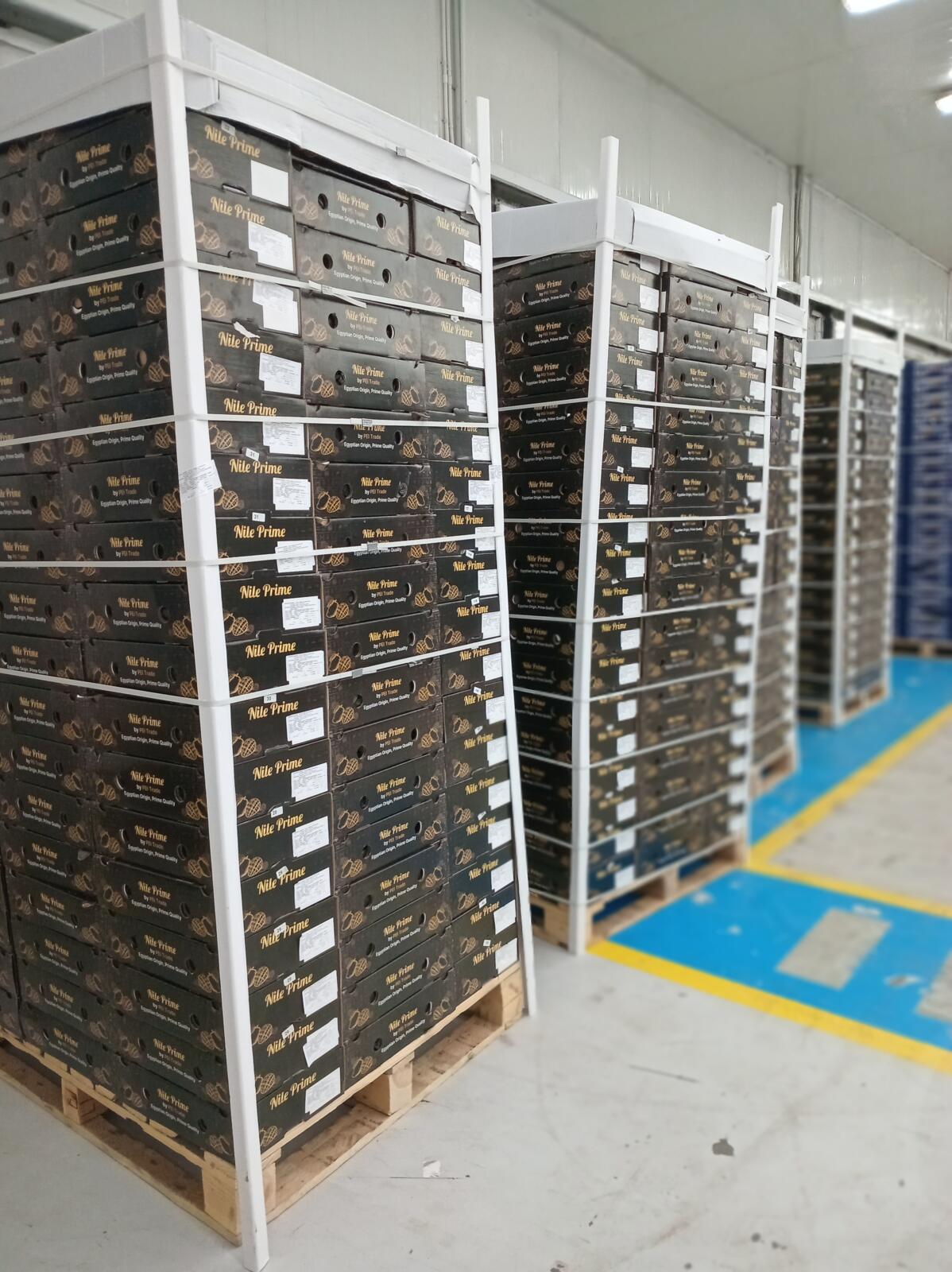
Arrival quality on Egyptian mango is largely decided before the container is sealed. The hours between picking and vessel loading, when field heat is removed and the fruit travels from farm to port, set the pace of ripening for the whole voyage. This is how that window is managed on a Nile Prime shipment in the 2026 season.
Removing field heat
Keitt coming off the trees in Ismailia and Sharqia in August carries considerable field heat. Fruit is picked in the early morning, moved to shade within the hour and transported to the packhouse the same day. After washing, grading and packing, palletised cartons go into forced-air pre-cooling, which pulls the pulp temperature down toward the carriage set point far faster than a holding room can. Loading warm fruit into a reefer and expecting the container to cool it is the single most common cause of soft arrivals, because a reefer is built to hold temperature, not to remove heat from a full stow.
The truck leg
Pre-cooled pallets move to port in refrigerated trucks, booked to match the packing schedule so fruit does not sit on the dock. Ismailia sits close to both Sokhna and Port Said, and the run to Alexandria takes a few hours more, so port choice is partly a question of which vessel gives the best sailing for the destination. Trucks are checked for set point and cleanliness before loading, and pallet temperatures are recorded at dispatch and again at arrival, so any break in the chain is visible on paper.
The 48 to 72 hour clock
Well run programmes get fruit from tree to sealed container within 48 to 72 hours. Compressing that window is a scheduling exercise: harvest crews, packhouse shifts, truck slots and the container gate-in time all have to line up. When a vessel slips, pre-cooled fruit holds in cold storage at the carriage temperature rather than waiting in a yard. Once at the terminal, stowage pattern and vent settings take over, and we covered those in detail in our guide to loading a mango reefer from Egypt.
What the buyer sees
Every step above leaves a record: harvest date, packhouse intake temperature, pre-cool exit temperature, truck logger data and container set point. Buyers who want independent eyes on the process can add a third party surveyor at loading, as described in our note on pre-shipment inspection on Egyptian mango. The paper trail is what turns a good arrival from luck into a repeatable outcome.
Book August and September positions
Keitt is at volume now and late-season positions are filling. Send your size mix, destination and target arrival window and we will confirm availability and the next loading date. Reach the Nile Prime export desk on WhatsApp at +20 10 9911 1918.