
Two exporters quote the same variety, the same count and the same carton, and the numbers are eleven percent apart. Buyers often read that gap as negotiating room. More often it reflects a real difference in what sits behind the price. Understanding the components makes it easier to compare offers honestly and to see when a low quote is hiding something.
Farmgate is the largest single component
The price paid to the grower usually accounts for the majority of an FOB mango quotation. It moves with three things: the size of the national crop, the strength of the Egyptian domestic market, and how much of a given block meets export grade.
That last point is the one buyers underestimate. If only 55 percent of a pick passes export selection, the export cartons carry the cost of the whole harvest. A year with good sizing and low blemish produces a higher pack-out rate and softer export pricing, even when the total crop is unchanged. Domestic demand matters too, because Egypt consumes a large share of its own mango and a strong local market pulls fruit away from export at any price.
Packing materials and packhouse cost
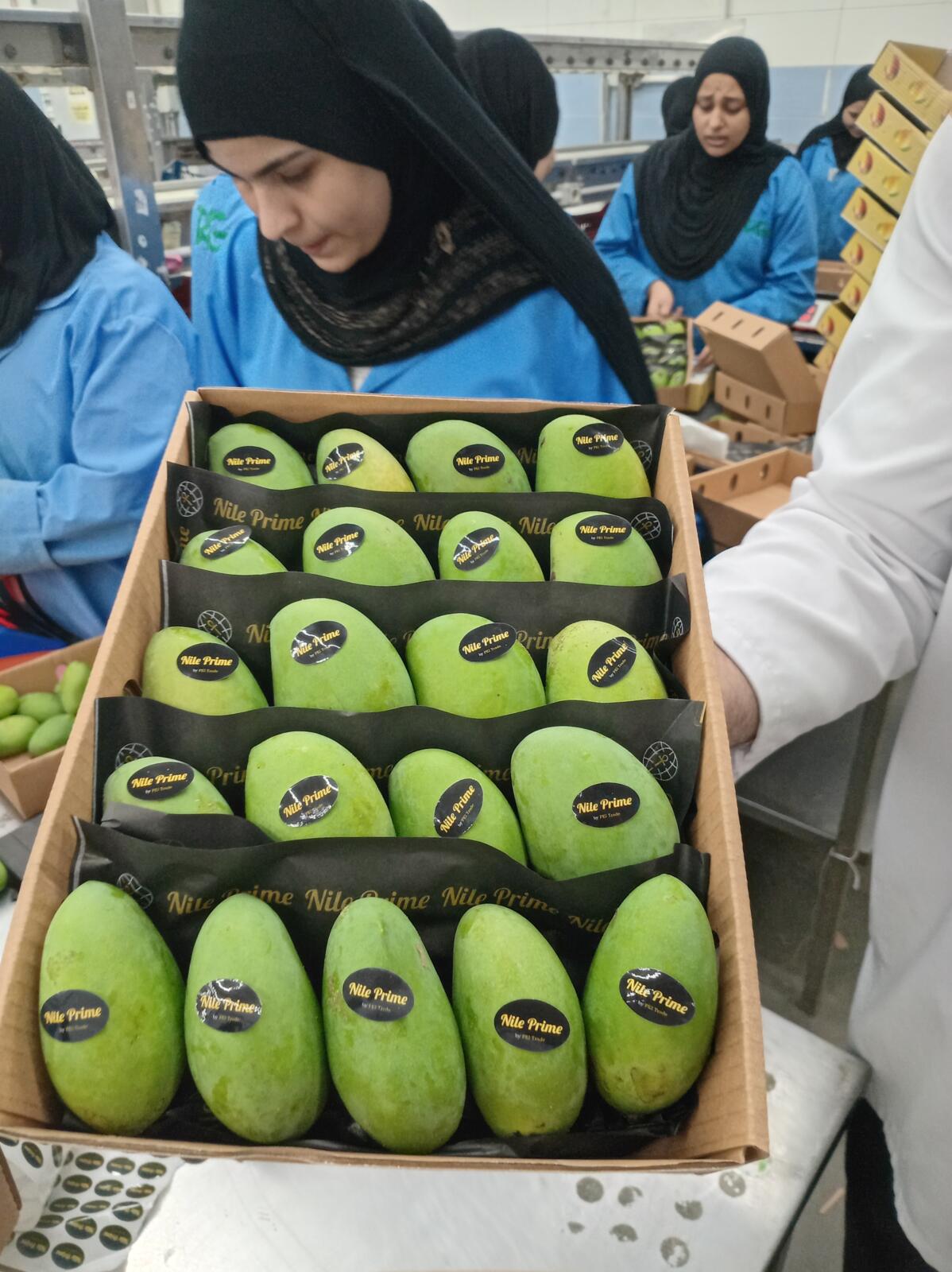
Cartons, foam net sleeves, liners, pallets, corner boards and strapping are a fixed cost per unit that does not scale down with volume. Corrugated board pricing has been the volatile item in recent years. Where a buyer specifies printed own-brand cartons rather than generic ones, the material cost rises and a minimum order quantity applies, since printing plates are not economic on small runs.
Packhouse labour covers de-sapping, sorting, grading and packing, and it is the line most affected at peak season when several exporters compete for the same crews.
Cold chain
Hydro-cooling or forced-air cooling, cold room holding and the pre-cooled loading dock all carry energy cost. This is where the cheapest quotes usually differ from the rest. An exporter who skips proper pre-cooling saves real money per container and transfers the risk to your arrival. The relationship between cooling discipline and arrival condition is set out in our guide to shipping Egyptian mango by sea.
Inspection, certification and documentation
Phytosanitary certification, certificate of origin and standard export paperwork are modest per-container costs. Third-party inspection by SGS or Intertek is an add-on, generally quoted separately and worth taking on a first shipment with a new supplier. Residue testing for specific destination requirements is also billed separately where the market demands it.
Freight and the terms you buy on
Inland haulage from packhouse to port, terminal handling, and reefer plug charges sit inside the FOB number. Ocean freight does not, which is exactly why FOB and CFR quotations cannot be compared side by side without adjustment. Reefer rates from Egypt move with vessel space, season and route, and they can shift substantially within a quarter. Our explanation of buying on FOB or CFR terms covers where each cost sits and who carries which risk.
Seasonal movement within the year
Prices are highest at the season opening in June and early July, when volume is thin and the first arrivals command a premium. The middle of the season, roughly late July through August, is the widest supply window and typically the softest pricing. From September the late Keitt volume tightens again and prices firm. Buyers with flexible timing can often save meaningfully by shifting a programme two or three weeks into the peak supply window.
How to read a quotation properly
Ask what the quote includes: the Incoterm, the carton weight and count, the grade, whether inspection is priced in, whether the carton is generic or printed, and how long the price holds. A quote without a validity date is not a quote. When two offers differ by more than a few percent, the difference is almost always in the grade standard, the pack-out assumption or the cooling protocol.
For a written quotation on Keitt, Kent or Naomi with the cost basis set out line by line, message our export desk on WhatsApp at +20 10 9911 1918 with your destination port, count and volume.